
Last updated October 9, 2026
Non-destructive entry first, always - and we re-key Schlage, Kwikset, and Baldwin locks on the spot while you watch
You get a price before we start. It does not change when we arrive. No surprises.
Commercial Locksmith Maintenance Checklist for Los Angeles Homeowners
Here’s a statistic that should stop you cold: a faulty commercial door lock that a locksmith flagged on a routine visit and you ignored can void your business property insurance claim after a break-in. Los Angeles insurers are increasingly requiring documented lock maintenance logs before they will pay out on a forced-entry claim. This guide reframes commercial locksmith maintenance as a liability and insurance issue, not just a security one. We’ll walk through the exact quarterly and annual tasks that prevent both break-ins and denied claims, with LA-specific climate factors, ADA checkpoints, and the maintenance log format your insurer actually wants to see.
Quick Answer
A commercial locksmith maintenance checklist for Los Angeles properties should be run quarterly and cover cylindrical locks, mortise locks, electrified strikes, and access control panels. Coastal air and Santa Ana dust accelerate cylinder wear, so lubrication and strike alignment checks every 90 days prevent most failures. Document every service visit in a dated log with the locksmith’s findings, because LA insurers now commonly request that log before approving a break-in claim.
Table of Contents
- Why Maintenance Is a Liability Issue, Not Just a Security One
- Quarterly vs. Annual Maintenance: What Gets Done When
- Hardware Type Checklists: Cylindrical, Mortise, Electrified, Access Control
- How LA Coastal Air and Santa Ana Dust Accelerate Lock Wear
- ADA Compliance Checkpoints Your Locksmith Should Verify
- Building a Maintenance Log That Satisfies Insurers and OSHA
- Red Flags That Legally Require Action Before You Reopen
- Common Mistakes to Avoid
- When to Call a Professional
- Frequently Asked Questions
Why Maintenance Is a Liability Issue, Not Just a Security One
Most Los Angeles business owners think of lock maintenance as a security expense. That’s half the picture. The other half is legal exposure. When a customer is injured because a door closer failed and a heavy commercial door slammed on them, your defense is only as strong as your maintenance records. If you cannot show a documented service history, the assumption is negligence. In LA’s litigation environment, that assumption costs real money.
Insurance carriers in California have tightened their underwriting standards over the past five years. More commercial policies now include clauses requiring “reasonable maintenance” of all entry hardware. After a break-in, the adjuster will ask for your lock service records. No log, no payout, or a heavily reduced one. We’ve seen this play out in Downtown LA, Koreatown, and the Valley. The businesses that keep a simple quarterly log fare dramatically better than those that scramble after the fact.
Treat lock maintenance the way you treat fire extinguisher inspections: boring, scheduled, and documented. The checklist below is designed to be handed to your locksmith on each visit, or used to evaluate whether your current provider is actually doing the work.
Quarterly vs. Annual Maintenance: What Gets Done When
Not every task needs to happen every visit. Some hardware wears faster than others, and some checks are annual by nature. Here is the breakdown we recommend for Los Angeles commercial properties.
Quarterly Tasks (Every 90 Days)
- Lubricate all cylinders and latches with a dry graphite or PTFE lubricant. Skip WD-40. It attracts dust, and LA has plenty of it.
- Check strike plate alignment on every door. A misaligned strike means the latch drags, which wears down the internal pins faster.
- Test electrified strikes and maglocks for consistent release. A sticky strike at 4:55 PM on a Friday is a door that will not lock over the weekend.
- Inspect door closers for oil leaks and adjust closing speed. A door that slams is a workers’ comp claim waiting to happen.
- Cycle every keyway with the master and change keys. If a key is starting to stick, the cylinder is telling you something.
- Check panic bar function on all exit doors. This is code-required and inspected by the fire marshal.
Annual Tasks (Once a Year)
- Full cylinder rebuild or replacement on high-traffic entries. A cylinder that cycles 300 times a day has earned a rebuild after a year.
- Access control panel firmware review and backup. Los Angeles power flickers during Santa Ana wind events. A panel that resets to factory defaults is a security hole.
- Mortise lock body removal, cleaning, and internal inspection. These are workhorse locks on older LA buildings. The internal springs and levers fail gradually, then suddenly.
- ADA compliance audit on all public-entry doors, including lever torque, closer pressure, and threshold height.
- Key control audit. Who has keys to what? If you cannot account for every master key, it is time to rekey.
- Full hardware inventory. Document every lock, strike, and panel with make, model, and condition. This feeds your insurance log.
Hardware Type Checklists: Cylindrical, Mortise, Electrified, Access Control
Different hardware fails in different ways. A one-size-fits-all checklist misses the failure modes that actually cost Los Angeles businesses money. Here is what we check on each hardware type.
Cylindrical Locks (Standard Knob and Lever Locks)
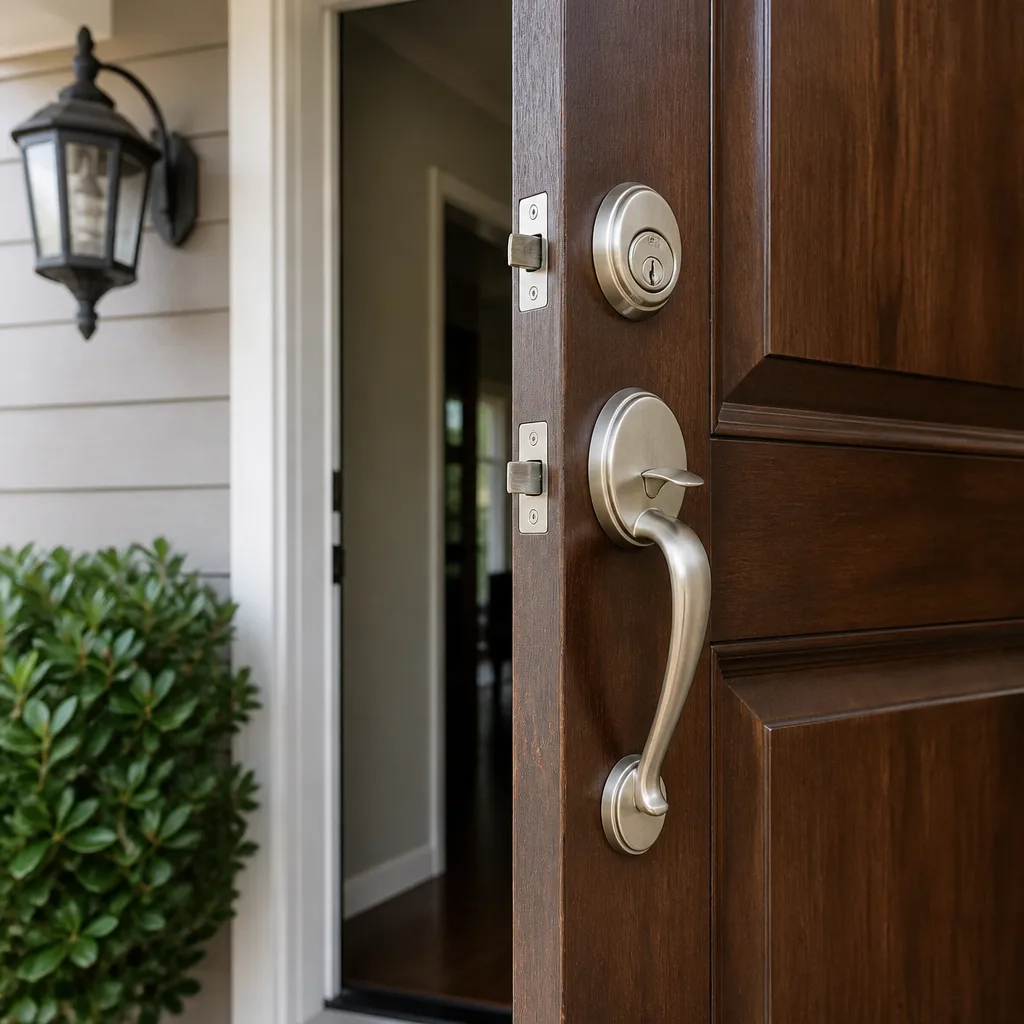
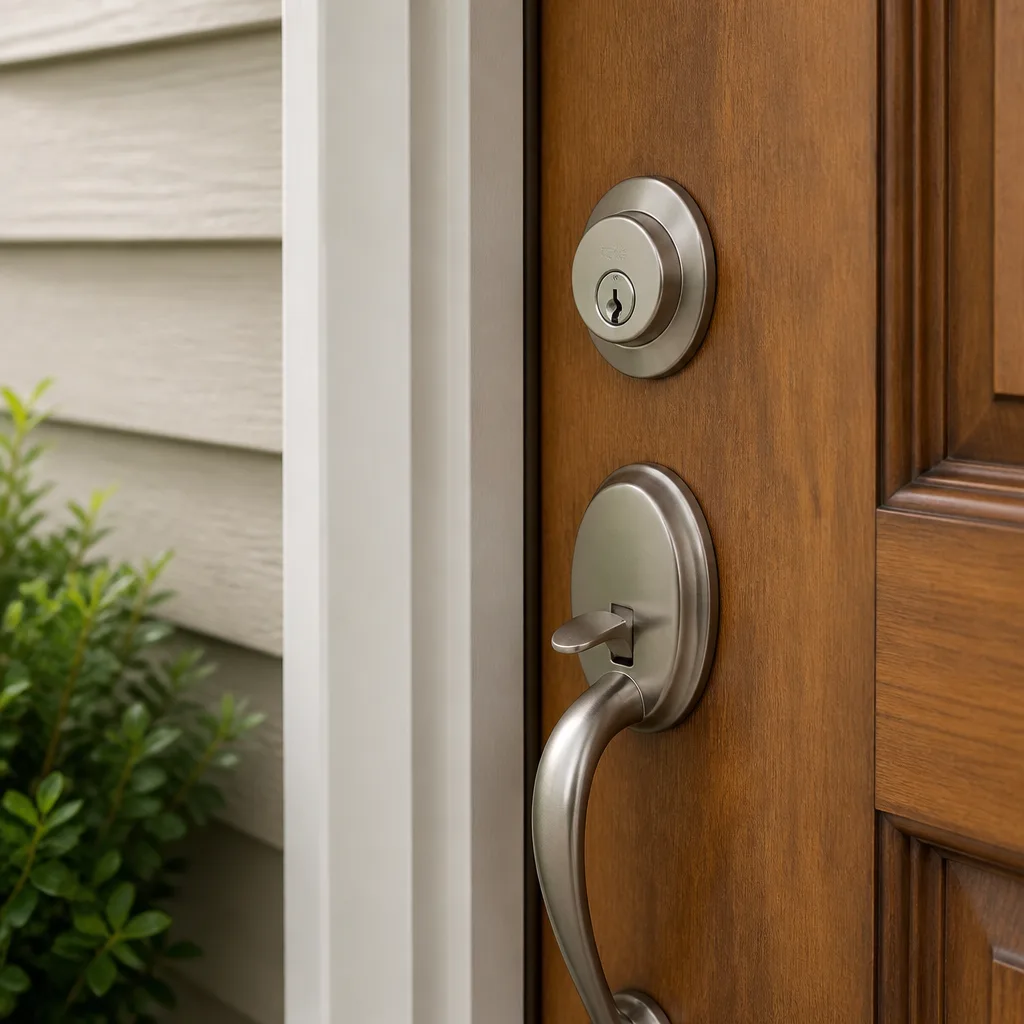
These are the most common locks in LA office suites and retail spaces. The internal springs and pins wear with every turn of the key. On a busy retail door in a neighborhood like Silver Lake or West Hollywood, a Schlage or Kwikset cylindrical lock can cycle 200 to 400 times a day.
- Remove the cylinder and check for brass shavings in the keyway, a sign of internal wear
- Inspect the retractor spring for tension loss, which causes the latch to feel mushy
- Verify the chassis screws are tight. A loose chassis lets the whole mechanism shift, accelerating wear
- Test the key at all positions, including a slow, hesitant turn, which exposes binding pins
Mortise Locks
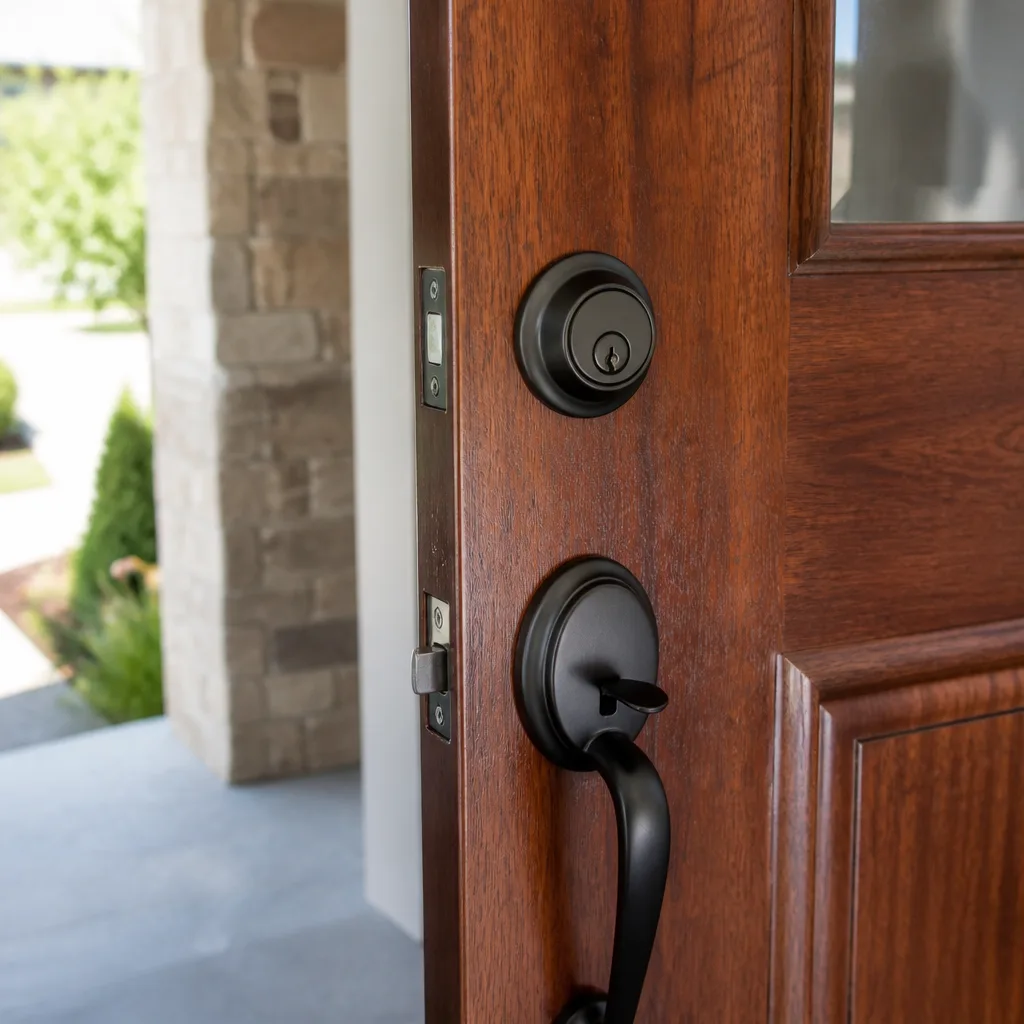
Older commercial buildings in Downtown LA and MacArthur Park often still run mortise locks, especially Baldwin and Sargent hardware. These locks are built like tanks, but they have more moving parts than cylindrical locks, which means more failure points.
- Remove the lock body and inspect the internal springs, levers, and hubs for cracks
- Check the thumbturn spindle for wear. A worn spindle means the deadbolt will not fully engage
- Verify the faceplate screws are tight and the faceplate sits flush
- Lubricate the internal cams with a light machine oil, not graphite, which can gum up the tighter tolerances
Electrified Strikes and Maglocks
Electrified hardware fails from two directions: mechanical wear and electrical issues. For common problems and how to fix them, see our dedicated troubleshooting resource. Santa Ana wind-driven dust gets into the strike mechanism and causes the solenoid to bind. Power surges from brownouts, common in older LA buildings during summer peak load, can fry control boards.
- Clean the strike cavity and check the keeper for debris
- Test the solenoid under load, not just at rest. A strike that releases when tested by hand but sticks under door pressure is a failure in progress
- Check the power supply voltage. Under-voltage causes slow, partial strikes. Over-voltage shortens solenoid life
- Verify the fail-safe and fail-secure configuration matches the fire code for that specific door
Access Control Panels
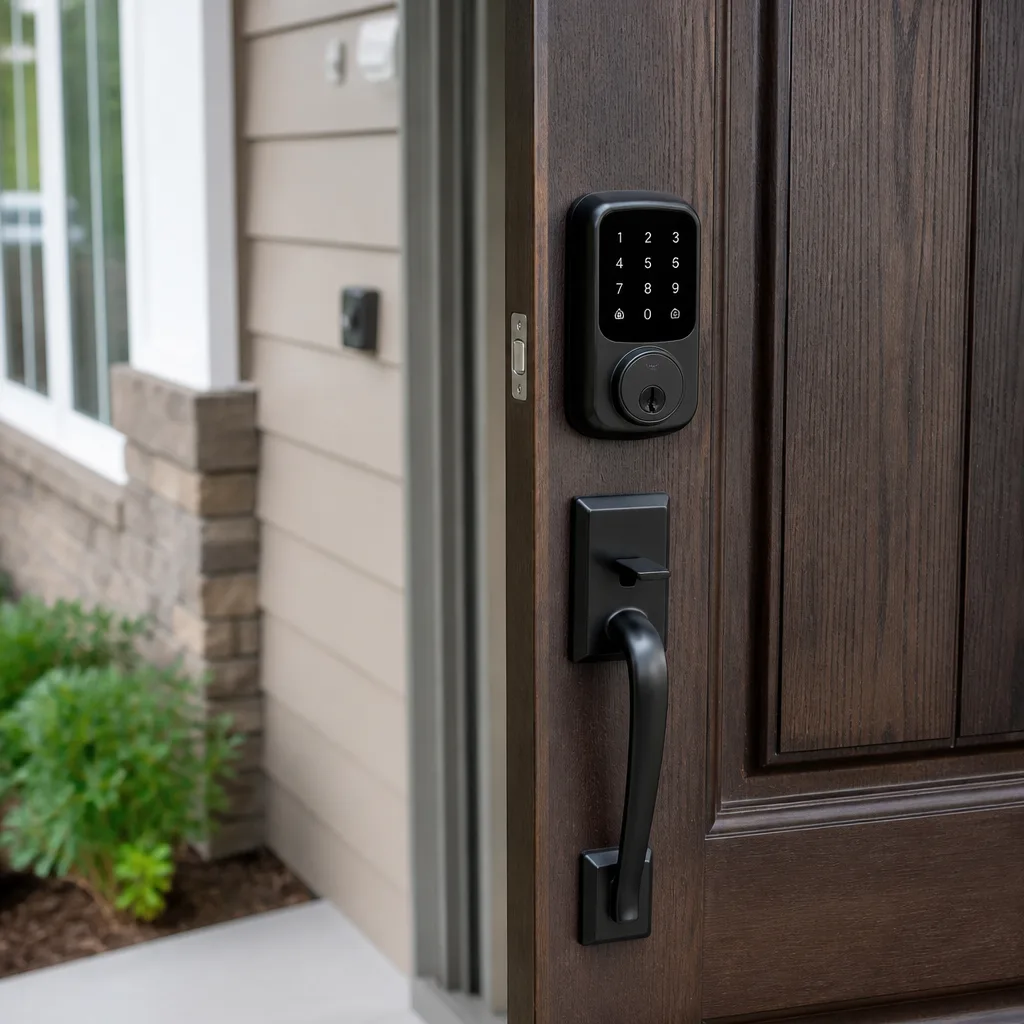
Panels from brands like Sargent and others on the commercial market are small computers. They need the same care as any other electronic system, plus a few lock-specific checks.
- Review the event log for repeated failed entry attempts or unusual access patterns
- Back up the credential database and verify the backup file opens correctly
- Check the battery backup. An LA power flicker should not drop every door unlocked
- Test the panel’s fail behavior during a simulated power loss. Doors must not remain unlocked if the fire code requires fail-secure
How LA Coastal Air and Santa Ana Dust Accelerate Lock Wear
Los Angeles is not one climate. Santa Monica and Venice get marine layer moisture and salt air. The San Fernando Valley gets dry heat and Santa Ana wind events that bury everything in fine dust. Each zone attacks locks differently, which means the maintenance schedule has to shift by location.
Coastal LA: Santa Monica, Venice, Playa del Rey, Long Beach
Salt air corrodes brass and steel hardware. We see cylinders within three miles of the coast that look ten years older than identical hardware in the Valley. The corrosion starts as a green or white film on the key and builds into pitting inside the cylinder. Once the pins pit, keys bind and eventually snap.
Schedule: Lubricate quarterly at minimum, and consider a corrosion-inhibiting lubricant designed for marine environments. On beachfront properties, we recommend a full cylinder inspection every six months. The salt does not wait for your annual visit.
Inland LA: San Fernando Valley, Pasadena, Burbank, Glendale
Santa Ana winds carry fine dust that gets into every gap. That dust mixes with lubricant and forms an abrasive paste. The paste accelerates pin and spring wear dramatically. A lock that would last five years in a clean environment fails in three under Valley dust conditions.
Schedule: Blow out cylinders with compressed air before lubricating, every single visit. If you lubricate over accumulated dust, you are making the problem worse. Valley properties also benefit from more frequent strike plate alignment checks, since door frames shift with the extreme temperature swings.
Central LA: Downtown, Koreatown, Mid-City, Hollywood
Older buildings here combine two problems: vintage hardware, often mortise locks from the 1960s and 1970s, plus heavy daily use. The hardware is worth preserving. A well-maintained Baldwin mortise lock from 1975 outperforms a brand-new budget cylindrical lock. But it needs annual internal servicing to stay that way.
Schedule: Annual mortise body removal and cleaning is non-negotiable in these buildings. Quarterly lubrication is the bare minimum. We also recommend a key control audit every six months in high-turnover commercial spaces, where keys walk away regularly.
ADA Compliance Checkpoints Your Locksmith Should Verify
A commercial locksmith in Los Angeles should check ADA compliance on every maintenance visit, because the standards are measurable and enforcement is active in LA County. A customer with a disability who cannot open your door has a clear path to a lawsuit. Here are the checkpoints.
- Lever handle operating force: ADA requires no more than 5 pounds of force to operate a lever. A trained locksmith carries a torque gauge and should test this on every visit. Old mortise locks with heavy springs often exceed this limit.
- Door closer pressure: Interior doors must require no more than 5 pounds of force to open. Exterior doors get a slightly higher allowance, but the closer must still allow the door to close fully from a 90-degree open position while remaining openable by someone with limited strength.
- Threshold height: Door thresholds must be no higher than 1/2 inch for exterior sliding doors, and 3/4 inch for other doors. A threshold that has shifted or a door that sags can create a trip hazard and an ADA violation at the same time.
- Clear opening width: The door must provide at least 32 inches of clear opening when open at 90 degrees. A misaligned door closer or a door that does not fully open because of furniture placement can drop you below this number.
- Hardware shape: Knobs on doors in public areas are an ADA violation. Levers, push bars, and U-shaped pulls are compliant. If your building still has knob hardware on a public entrance, that is a required upgrade, not a recommendation.
Your locksmith should document each of these measurements in the maintenance log. If a violation is found, you need a written recommendation and a timeline before the next fire marshal inspection or, worse, a plaintiff’s attorney sends a demand letter.
Building a Maintenance Log That Satisfies Insurers and OSHA
The log is the entire point. Maintenance without documentation is, from an insurer’s perspective, no maintenance at all. Here is how to build a log that holds up.
What the log must include on every entry:
- Date and time of service
- Name and license number of the locksmith
- Every door serviced, identified by a consistent naming system (Front Entry, Loading Dock, Suite 204, etc.)
- Work performed on each door, in plain language
- Parts replaced or repaired, with brand and model where relevant
- ADA measurements taken and results
- Any recommendations made and whether corrective action was taken
Format options:
A paper log book works and some insurers prefer it because it is harder to backdate. A digital log with photos is better for most LA businesses, because before-and-after photos of each repair create an evidence trail that survives staff turnover. The key is consistency. A log with a six-month gap looks worse than no log at all, because it proves you knew maintenance was needed and stopped doing it.
OSHA considerations:
Workplace safety audits look at egress doors, panic bars, and door closers. Your maintenance log should document that your employee exits function correctly every quarter. If an OSHA inspector finds a non-functioning panic bar and you have no service record, you are defending a citation. If you have a dated log showing the panic bar was tested and passed 30 days earlier, the conversation changes.
Red Flags That Legally Require Action Before You Reopen
Some findings on a maintenance visit are not “we should fix that soon” items. They are “you cannot legally operate until this is fixed” items. A responsible commercial locksmith will flag these clearly. Here is what that list looks like.
- A panic bar on a marked exit door that does not release fully with one hand. This is a life-safety code violation. If the fire marshal finds it during an inspection, you can be cited and ordered to close until corrected.
- Any exterior door that will not latch securely. An unlocked exterior door is an open invitation and, after a break-in, a denial-of-claim justification. “The door would not close properly” is not a defense that works with adjusters.
- An exit door that requires more than 5 pounds of force to open. This is an ADA violation and a fire-safety issue simultaneously. Same legal exposure, two enforcement paths.
- An access control panel whose fail-safe/fail-secure behavior has changed. If a power loss now leaves a door unlocked that should stay locked, or locks a door that should open for egress, that is a code violation and a security hole.
- A keyway that shows evidence of picking or tampering. Scratches around the plug, loose pins, or a key that suddenly works poorly are signs that someone attempted entry. Document it, rekey, and file a police report if a break-in is suspected.
- A broken door closer on any door serving the public. A slamming door is an injury claim. Fix it before you reopen for the day.
Each of these items belongs in the maintenance log with a written recommendation and a date. If an incident occurs and you can show you were told about the problem and chose not to act, the liability is not just on the insurance company. It is on you.
Common Mistakes to Avoid
- Skipping documentation because “the locksmith knows what he did.” The locksmith will not be the one answering to your insurer or a plaintiff’s attorney. The log is your only evidence. No log, no defense.
- Lubricating with WD-40 or other household oils. These attract the fine dust that Santa Ana winds deposit everywhere in Los Angeles. Within months, the lock is gummed with an abrasive slurry. Use dry graphite or PTFE lubricant only.
- Treating all LA locations the same. A Santa Monica storefront and a Sylmar warehouse need different maintenance frequencies. Salt air and desert dust are different animals. Your schedule should reflect your specific microclimate.
- Deferring ADA fixes because the budget is tight that quarter. The cost of a lever handle replacement is a few hundred dollars. The cost of an ADA lawsuit starts in the five-figure range. This math only goes one way.
- Assuming a new lock does not need maintenance for a year. A new cylindrical lock installed in a high-traffic LA retail space can show measurable internal wear within six months. Maintenance starts on day one, not year three.
- Not tracking keys through staff turnover. If you have had ten employees come and go and no key control audit in two years, you do not know who can open your doors. In a city the size of Los Angeles, that is a risk you cannot carry indefinitely.
- Using a locksmith who does not provide a written service report. If the work is not written down, it did not happen. A verbal “everything looked fine” has zero value in an insurance claim. Demand a written report every visit.
When to Call a Professional
Some maintenance tasks a business owner can handle: keeping door hardware clean, noting when a key starts to stick, tracking which employees have keys. But most of the checklist above requires a commercial locksmith’s tools, training, and liability insurance. For more guides & resources on maintaining your property, visit our blog. Call a professional when a key binds or breaks, when a strike plate shifts, when an electrified lock behaves inconsistently, when ADA measurements are due, or when you have any finding that lands on the red-flag list above. A qualified commercial locksmith in Los Angeles should provide a written report, document ADA measurements, and flag legal-compliance issues in plain language. Preston Locksmith & Security offers free estimates in Los Angeles. Call (409) 405-4485 and our team will walk you through what your property actually needs, with a written price before any work begins.
Frequently Asked Questions
Most Los Angeles commercial properties need a maintenance visit every 90 days for lubrication, strike alignment, and electrified hardware testing. Annual visits should include full cylinder rebuilds, mortise lock body servicing, access control panel review, and ADA compliance measurement. Coastal properties within three miles of the ocean may need cylinder inspections every six months due to salt air corrosion, while Valley properties benefit from more frequent dust removal before lubrication.
Quarterly maintenance visits for a small to medium Los Angeles commercial property typically run $125 to $250 per visit, depending on the number of doors and hardware types. Annual comprehensive service, including cylinder rebuilds and ADA measurement, usually falls between $300 and $600. The written price should be confirmed before work starts. For an exact quote on your specific property, call (409) 405-4485 and a Preston Locksmith & Security technician will provide a free estimate.
You can handle basic tasks like keeping hardware clean and noting when a key starts to bind, but most checklist items require professional tools and training. Lubricating a cylinder incorrectly with household oil accelerates wear. Testing an electrified strike under load requires electrical knowledge. Measuring ADA compliance requires a torque gauge. And if a door fails after you worked on it, your liability exposure is far greater than if a licensed commercial locksmith performed the work.
Los Angeles commercial insurers increasingly request maintenance logs when processing forced-entry claims. If you cannot provide dated service records showing reasonable maintenance, the claim can be reduced or denied, especially if the adjuster finds evidence that hardware failure contributed to the entry. A quarterly maintenance log with written reports is now standard practice for LA businesses that want their claims paid without a fight.
Fail-safe means the door unlocks when power is lost, which is required on marked fire exits so people can escape during a power outage. Fail-secure means the door stays locked when power is lost, which is used on secure areas like cash rooms and data closets. The wrong configuration on the wrong door is both a code violation and a security failure. Your commercial locksmith should verify this on every maintenance visit and document the result.
ADA compliance for commercial doors means lever handles instead of knobs, no more than 5 pounds of force to operate, door closers that allow the door to open without excessive resistance, and thresholds within height limits. A commercial locksmith with a torque gauge can measure all of these in under 15 minutes per door. If your building has knob hardware on any public door, that is an immediate violation. Schedule a compliance check by calling (409) 405-4485.
The Bottom Line
Commercial lock maintenance in Los Angeles is not a security nicety. It is a liability management program. Every quarter, your locks need lubrication, alignment checks, and electrified hardware testing. Every year, they need cylinder rebuilds, mortise body service, and ADA measurement. Document everything in a dated log, because that log is what stands between you and a denied insurance claim or an indefensible lawsuit. The businesses that treat lock maintenance like fire extinguisher inspections are the ones that survive break-ins and inspections with their money and reputation intact. Start your log today.
Written by Kevin Yoon, Owner at Preston Locksmith & Security, serving Los Angeles since 2008.
For a free commercial locksmith maintenance estimate in Los Angeles, call (409) 405-4485. Our team provides a written price before any work begins, a live trackable arrival time, and before-and-after photos of every job. Every repair is covered by the 365-Day Done Right Promise, including a free second visit if the repair fails. Learn more about our commercial locksmith services in Los Angeles, rekeying services, and door lock repair, or visit the Preston Locksmith & Security home page for all services.