
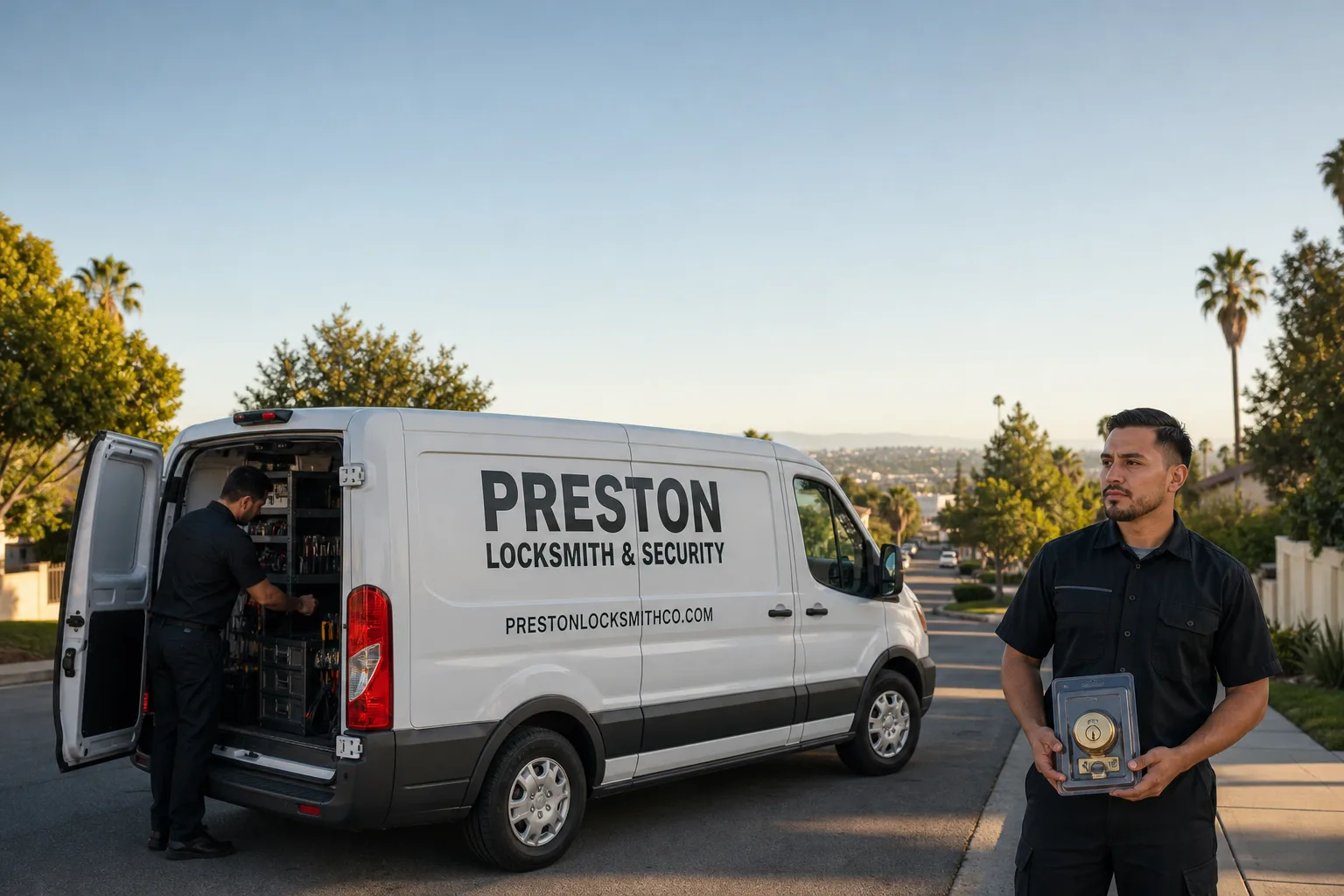
Non-destructive entry first, always - and we re-key Schlage, Kwikset, and Baldwin locks on the spot while you watch
You get a price before we start. It does not change when we arrive. No surprises.
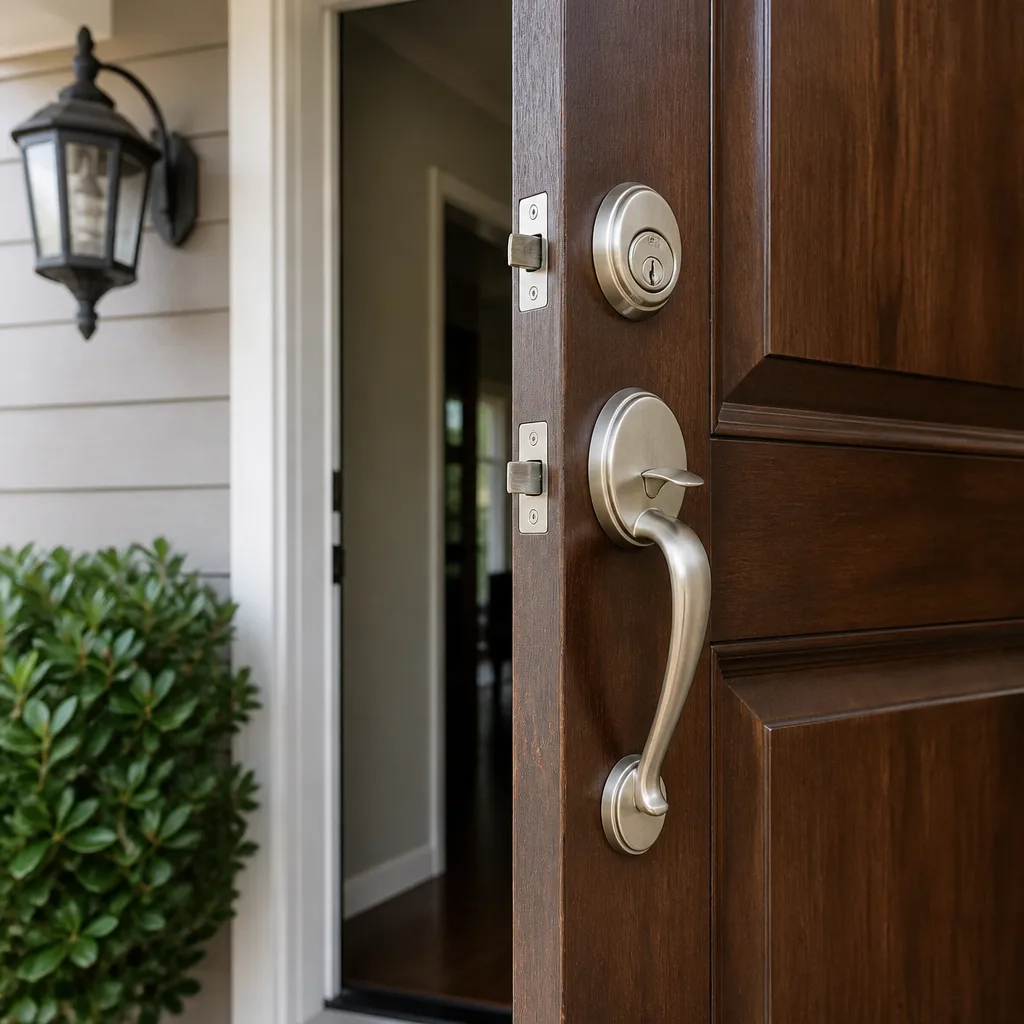
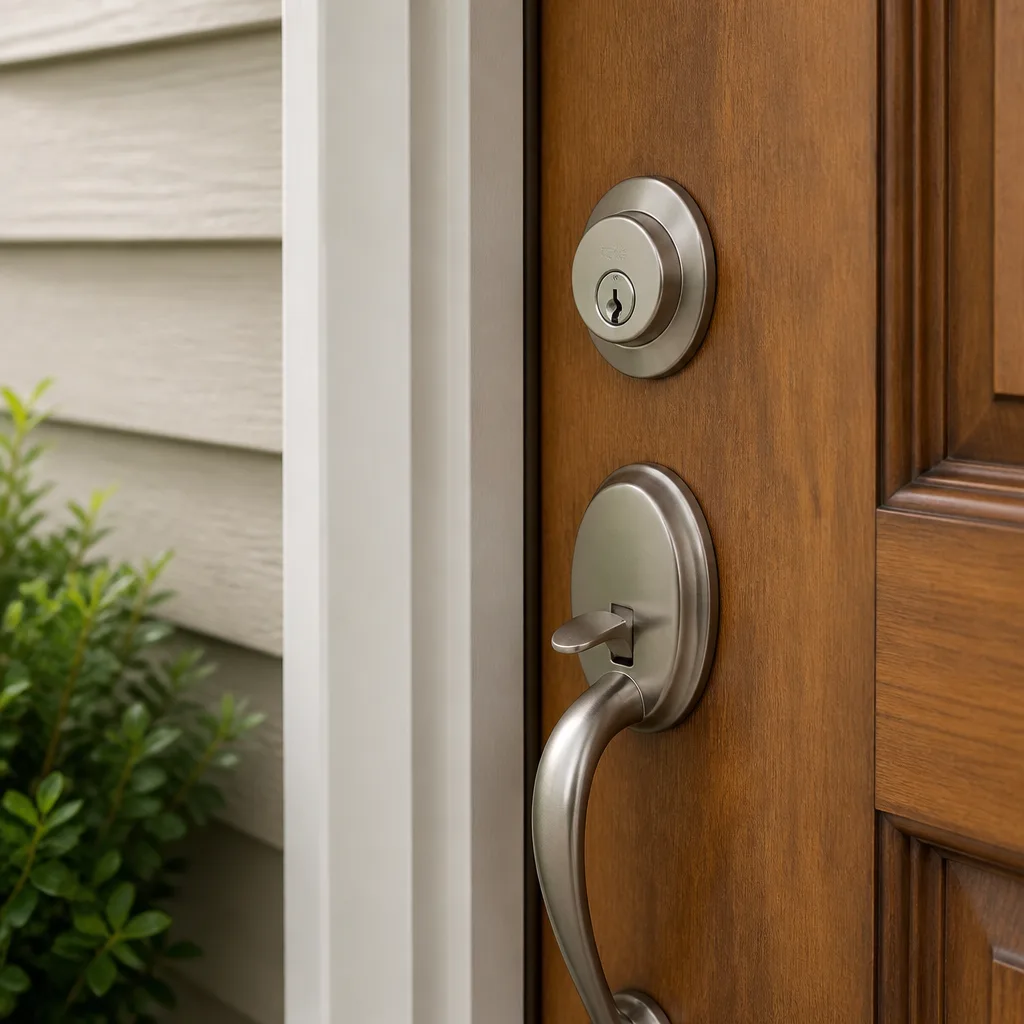
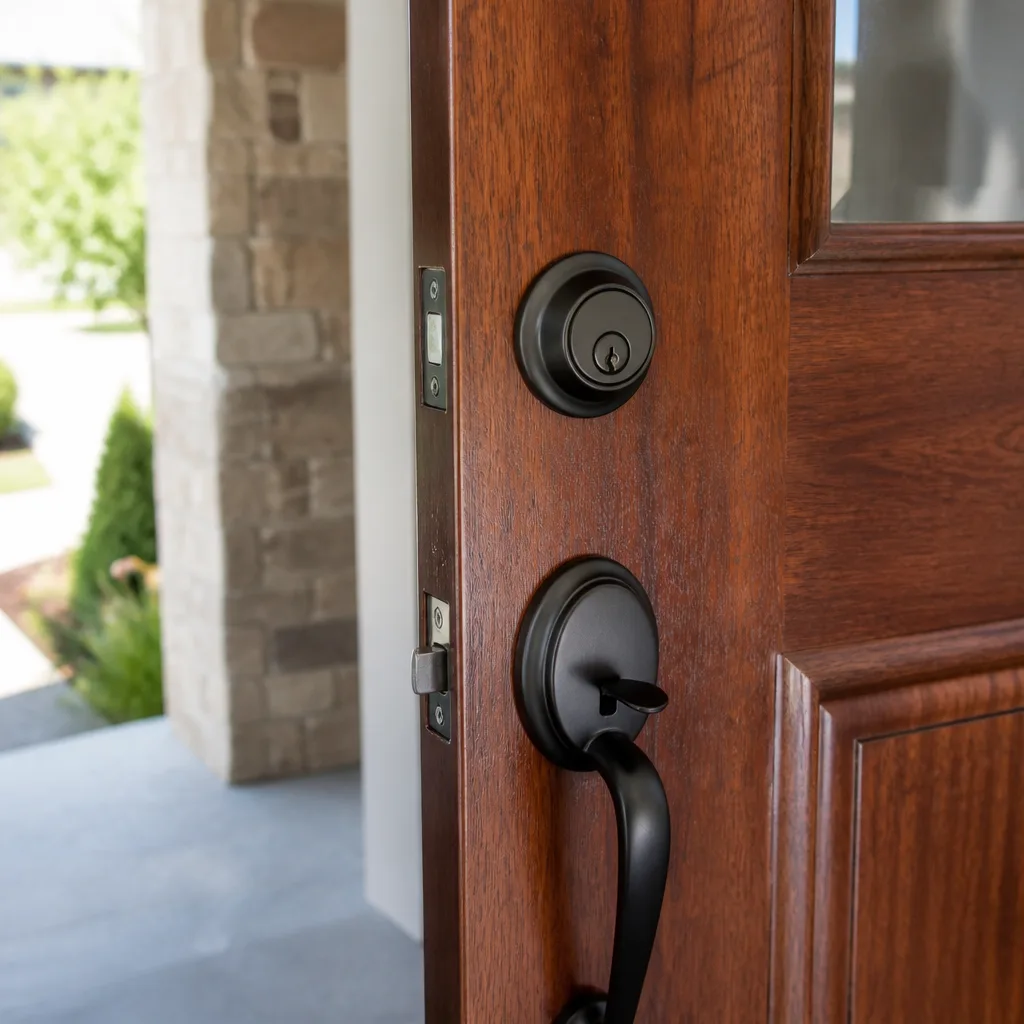
Deadbolt Won’t Line Up With the Frame
What’s Happening
When your deadbolt won’t line up with the strike plate opening in the door frame, the bolt is missing its target – hitting wood or metal instead of sliding cleanly into the hole. This almost always means the door has shifted relative to the frame, or the strike plate has moved, or both. It is a structural alignment problem, not a lock defect.
The deadbolt itself is usually fine. What’s changed is the geometry between the door and the frame. Doors are wood, frames are wood, and wood moves – with moisture, temperature swings, settling foundations, and the simple accumulation of years of opening and closing. The bolt is just the messenger. It’s telling you that the door and frame no longer agree on where the opening is. A locksmith can measure exactly how far off they are and choose the right fix for that specific gap.
Why It Happens
The Door Has Sagged or Swelled
This is the most common cause. Wood doors absorb moisture in humid months and dry out in winter, expanding and contracting enough to push a bolt off its mark by a quarter-inch or more. If the misalignment is worse in summer than in winter, or after heavy rain, moisture movement is almost certainly the culprit. You’ll often notice the door itself drags at the top or bottom corner when you swing it – that drag is the same shift that’s throwing off your bolt.
The Door Hinges Have Loosened or Worn
Hinges carry the weight of the door every single time it opens. Over years, the screws work loose in their holes, and the door drops – sometimes just a millimeter, sometimes enough to see a gap at the top of the door frame. If the bolt now hits low on the strike plate opening, or scrapes the bottom edge of it, a sagging hinge is the likely cause. Check by lifting the door handle slightly while someone else watches the top corner of the door – if it rises visibly, the hinges are loose.
The Strike Plate Has Shifted or Was Never Centered
Strike plates are held in by two screws. Those screws can work loose, especially on high-traffic doors. When the plate shifts even slightly, the mortise (the rectangular hole in the frame) no longer lines up with where the bolt wants to go. If you look at the strike plate and can see fresh bright scratch marks on one side of the opening, that’s exactly where the bolt is hitting. A shifted plate is a fast fix, but the right fix also addresses why it shifted.
The Door Frame or Jamb Has Moved
Settling foundations, framing shrinkage, or a previous repair done without shimming correctly can push the door jamb out of plumb over time. This is less common than the causes above but worth flagging because it’s the one that can’t be solved with a quick strike plate adjustment. If you hold a level against the inside face of the door jamb and it reads off-plumb, the frame itself has moved. That changes the repair scope and your locksmith will tell you on arrival exactly what the path forward looks like.
What to Do Right Now
- Stop forcing the deadbolt. Every time you muscle the bolt into a misaligned strike, you’re wearing down the bolt tip, scoring the frame, and potentially stressing the cylinder housing. If it won’t turn easily, leave it unlocked and use a secondary lock or security bar until the fix is done.
- Photograph the bolt and strike plate before you touch anything. A close-up showing exactly where the bolt is hitting – top edge, bottom edge, or face of the frame – tells a technician a lot before they arrive. Two seconds with your phone saves time on the job.
- Check the hinges while the door is closed. Look at the gap between the door edge and the frame all the way around. An uneven gap (wider at top, narrower at bottom, or vice versa) points straight to a hinge problem. Note which corner has the bigger gap.
- Try the lift test. Gently lift the door handle upward while you attempt to turn the deadbolt. If it suddenly clears and the bolt slides home, you’ve just confirmed the door has dropped and the hinges are involved. This is useful information – tell your technician before they arrive.
- Don’t enlarge the strike plate hole yourself. It’s tempting to chisel or file the opening bigger. Resist it. An oversized mortise weakens the plate’s ability to resist a kick-in, and if you go too far, the frame itself needs to be repaired. Let the technician measure the actual offset and make a precise cut if one is needed.
How We Fix It
When your local Preston Locksmith & Security technician arrives, the first thing they do is measure the offset – how far the bolt is missing the strike plate opening, and in which direction. That measurement determines whether the fix is a strike plate repositioning, hinge adjustment, or a combination of both.
For a hinge-related drop, the technician tightens or replaces loose screws, and in many cases drives longer screws into solid framing to give the hinge something firm to grip. For a strike plate that has shifted or was never correctly positioned, they reset and re-mortise it to the correct location. If the door itself has swollen, they assess whether the bolt clears after hinge correction or whether the door edge needs light planing.
Most alignment jobs are handled under our Door Lock Repair service. The work typically takes under an hour for a standard door. Before any of that starts, you get a written price. That’s not a formality – it’s how we work on every job, covered by the 365-Day Done Right Promise. If it’s not right, we come back. No charge, no argument.
Frequently Asked Questions
A deadbolt that won’t fully engage is a security risk – it means your door is effectively unlocked at night or when you leave. Even if the bolt partially enters the strike, a partially thrown bolt offers very little resistance to a forced entry. We’d treat this as something to fix today rather than something to schedule for next week. Call (409) 405-4485 and your local team can tell you how soon they can be there.
Yes. Your local Preston Locksmith & Security team handles door lock alignment calls the same day in most cases. Phones are answered by a live person around the clock – no voicemail, no callback queue. When you call (409) 405-4485, you’ll get a real person who can give you a live arrival time, not a four-hour window.
The honest answer is that it depends on what the technician finds when they measure the offset and inspect the hinges – a simple strike plate reset is a different job than a full hinge rebuild plus strike re-mortise. What we can promise is that you’ll have the price in writing before any work starts. No estimate that balloons into a bigger invoice at the end. Call (409) 405-4485 for a free written estimate scoped to your specific door.
The most common reason is that the previous repair treated the symptom – moving the strike plate to where the bolt was landing – instead of addressing why the door shifted in the first place. If the underlying hinge wear, swelling, or frame movement wasn’t corrected, the door keeps drifting and the bolt keeps missing. A technician who measures the full picture rather than just adjusting the plate gives you a fix that holds. That’s why we also send before-and-after photos so you can see exactly what changed.
Get It Fixed
A deadbolt that won’t seat is a door that isn’t secure. Call (409) 405-4485 right now – a live person picks up, gives you a real arrival time, and your local Preston Locksmith & Security team comes out with a written price in hand before any work starts. Book online if that’s easier.
Written by Kevin Yoon, Owner at Preston Locksmith & Security, part of the Relay Home Co. family since 2008.
What Our Customers Say
"Showed me how to rekey a lock myself for the next time."
- Omar W."Commercial office lock replacement. Booked in the app, got a confirmation and a text with ETA. Quick and tidy."
- Jake L."Re-pinned the locks at our rental. Convenient and quick."
- Tina D.