
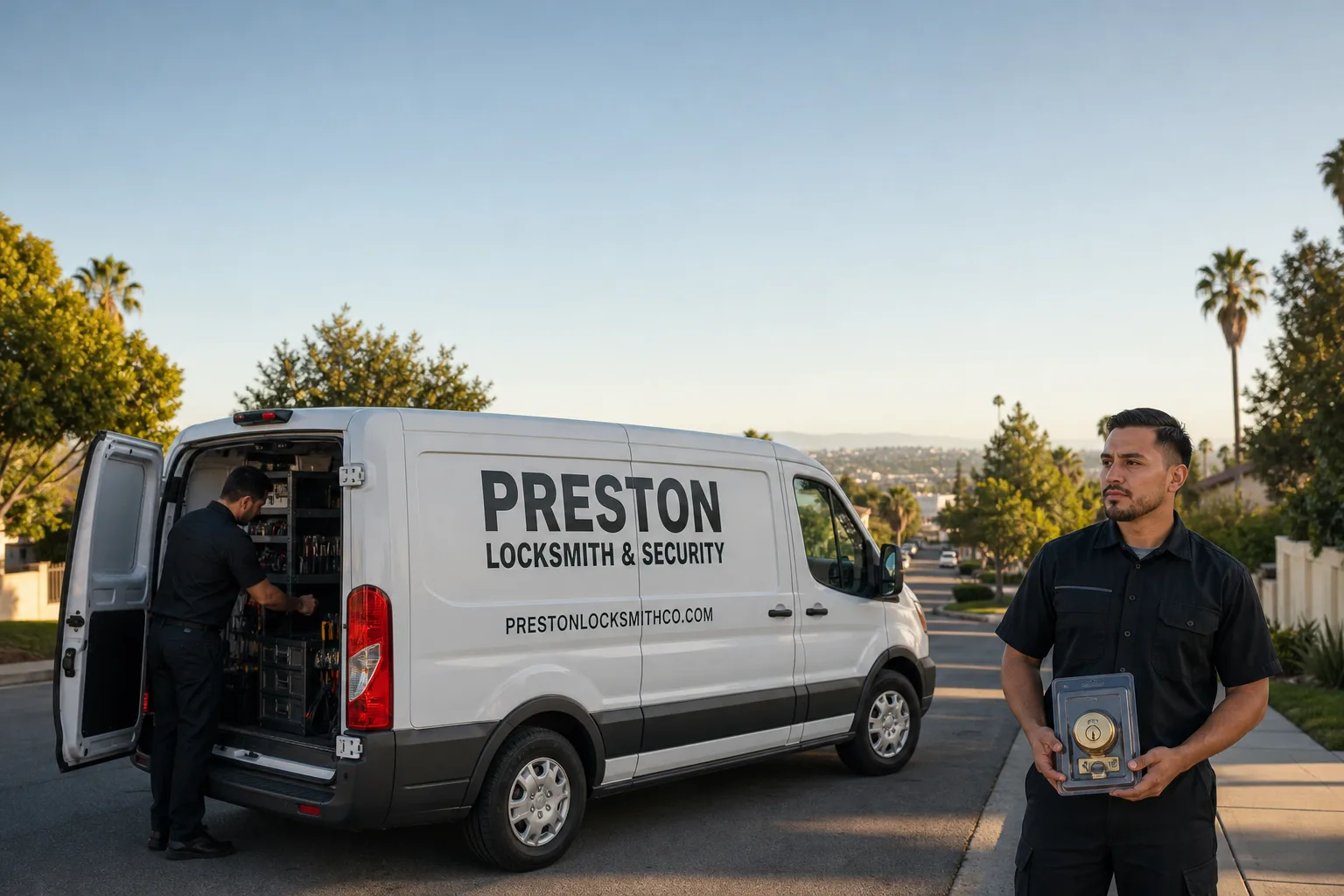
Non-destructive entry first, always - and we re-key Schlage, Kwikset, and Baldwin locks on the spot while you watch
You get a price before we start. It does not change when we arrive. No surprises.
Lost the Only Key to a Safe
Losing the only key to a safe means you’re locked out of your own belongings with no spare and no backup code – a licensed locksmith can open most residential and light-commercial safes without damaging the contents inside. The fix depends on the safe type: a keyed safe typically requires picking or impressioning the lock, while a combination safe with a key override needs a slightly different approach. Either way, this is a job for a trained technician, not a pry bar.
Most people don’t realize how many options exist before anything gets drilled. A skilled locksmith can often decode or pick a keyed safe cylinder and cut a working key on the spot, so you leave with both the safe open and a usable key in hand. If the lock itself is damaged or worn beyond picking, replacing just the lock cylinder – not the whole safe – is usually the more sensible path. The goal is always to get you in cleanly and leave the safe fully functional.
Why It Happens
The Key Was Only Ever a Single Copy
Safe manufacturers ship most residential safes with two keys. Over time, one gets lost, one gets misplaced in a drawer nobody opens, and eventually you’re down to zero. If you’ve never had a duplicate cut, this is almost certainly what happened. There’s no mechanical failure here – it’s simply a copy-management problem, and it’s the most common reason people call us about safes.
The Lock Cylinder Has Worn Out
Keyed safe locks are often low-use items that don’t get the maintenance a door lock would. Pins corrode, the keyway collects debris, and after years of occasional use the cylinder stiffens until the original key stops turning cleanly. If you had a key that worked six months ago but now binds or won’t fully turn, worn internal components are the likely culprit. You’ll feel it as resistance at the same point in the rotation every time.
The Key Was Copied Incorrectly
A safe key cut on a general-purpose key duplicator at a hardware store sometimes comes out slightly off – safe cylinders have tighter tolerances than door locks. If the key you lost was itself a copy, the original may never have been cut correctly either, and the lock has just been tolerating a near-miss for years. A badly cut key can eventually jam inside the cylinder, which adds a second problem on top of the first.
The Override Lock on a Combination Safe Has Seized
Many combination and electronic safes have a keyed override cylinder that rarely gets used – which means it almost never gets lubricated. When you finally need it, the cylinder may be frozen from years of sitting idle. If you turn the key and feel nothing, or the key won’t insert fully, the override cylinder itself has likely seized. Don’t force it: a snapped key in an override cylinder is significantly harder to resolve than a seized one.
What to Do Right Now
- Stop forcing anything. A snapped key inside the cylinder turns a straightforward lockout into a broken-key extraction job. If the key – or the dial, or the handle – isn’t moving, stop applying pressure and call a technician.
- Check the obvious places first. Before calling, spend two minutes looking in the original safe packaging, the envelope the keys came in, a fireproof document folder, and the back of any junk drawer. Safe manufacturers often ship a labeled key sleeve – it’s easy to forget where it landed.
- Photograph the safe door and model plate. Find the brand name, model number, and serial number – usually stamped on the door face or inside the door frame. A clear photo of these lets the technician look up the keyway spec before they arrive, which can speed things up.
- Note what you can hear and feel. Does the lock cylinder turn at all, or is it completely frozen? Does anything rattle inside? Can you see any visible damage around the keyway? These details help the technician diagnose the problem over the phone and arrive with the right tools.
- Do not attempt to drill, pry, or cut the safe yourself. Safe bodies are designed to resist exactly this. Attempting it without the right equipment risks destroying the contents and making professional entry harder. A trained locksmith can open most residential safes without permanent damage – but only if the safe hasn’t already been forced.
How We Fix It
When your local Preston Locksmith & Security technician arrives, the first thing they do is assess which entry method is right for your specific safe – picking, impressioning, or decoding – based on the lock type, its condition, and whether any key material is lodged inside the cylinder. For most standard residential keyed safes, impressioning or picking the cylinder is the preferred path: no damage, and you end up with a working key cut from the original lock profile.
If the cylinder is worn or seized past the point of picking, the technician can replace just the lock – not the entire safe. They’ll fit a new cylinder matched to your safe’s keyway, cut you two fresh keys on the spot, and test both before they leave. The whole process typically wraps in under an hour for a standard residential safe. Before any of this starts, you’ll have a written price for the specific job in front of you – that’s the price on your invoice, no adjustments on the way out. The work is covered by our 365-Day Done Right Promise, and if the repair fails, we come back at no charge.
The services that handle this are our Residential Locksmith and Door Lock Repair offerings – the same technicians who work your front door deadbolt are trained on safe cylinders and keyed lockboxes.
Frequently Asked Questions
In most cases, yes – a trained locksmith can open a keyed residential safe without drilling or cutting by picking or impressioning the lock cylinder. Destructive entry is a last resort, used only when the lock is so badly damaged that non-destructive methods won’t work. When you call, describe the safe brand, model, and condition of the lock so the technician can bring the right tools and give you an honest read on the options before they arrive.
It depends on what’s inside. If the safe holds medication, critical documents, or a firearm, treat it as urgent and call today. A locked-out safe is not a safety hazard in itself, but a key jammed partway into the cylinder can worsen if the safe is handled incorrectly in the meantime. If you’re unsure, call (409) 405-4485 and describe the situation – a live person will answer and help you figure out the right timeline.
Your local Preston Locksmith & Security team handles residential locksmith calls on a scheduled basis, and safe work is typically bookable same-day or next-day depending on your area. Call (409) 405-4485 right now – someone picks up every call, every hour, no voicemail. We’ll give you a real arrival window, not a four-hour guess, and you’ll be able to track the technician on the way.
The price varies by safe type, lock condition, and whether a new cylinder or key cutting is needed – so we don’t publish a flat number here, because your job might not match the average. What we do is give you a written price for your specific job before anyone starts work, and that number is the same number on your invoice. Call (409) 405-4485 for a free estimate – it takes a few minutes on the phone and there’s no obligation.
Get It Fixed
Call (409) 405-4485 right now – a live person answers every call, day or night. Your local Preston Locksmith & Security team will give you a written price before any work starts, a real arrival window you can track, and a 365-Day Done Right Promise on every job. You can also book online if that’s easier.
Written by Kevin Yoon, Owner at Preston Locksmith & Security, part of the Relay Home Co. family since 2008.
What Our Customers Say
"Showed me how to rekey a lock myself for the next time."
- Omar W."Commercial office lock replacement. Booked in the app, got a confirmation and a text with ETA. Quick and tidy."
- Jake L."Re-pinned the locks at our rental. Convenient and quick."
- Tina D.