
Non-destructive entry first, always - and we re-key Schlage, Kwikset, and Baldwin locks on the spot while you watch
You get a price before we start. It does not change when we arrive. No surprises.
Sargent Car Key Cutting: The Los Angeles Owner’s Guide
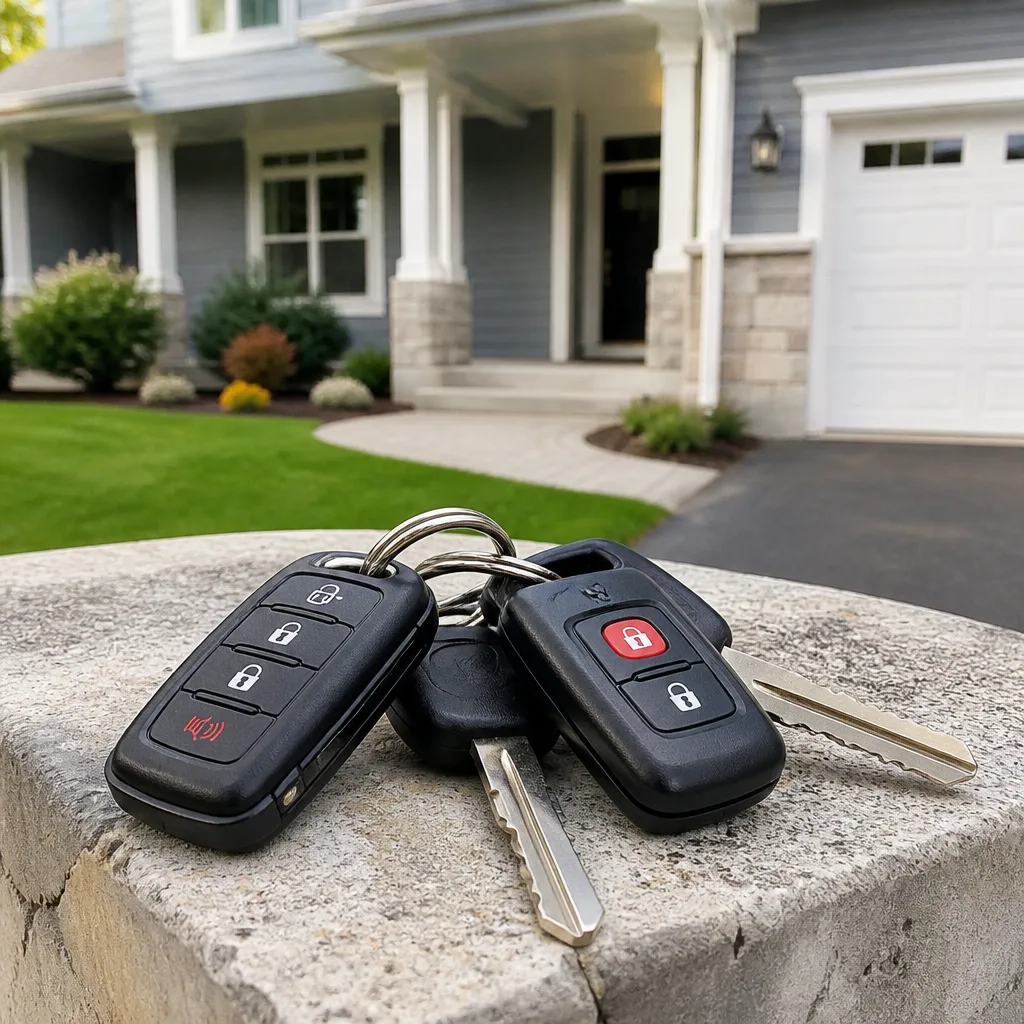
If you need Sargent car key cutting in Los Angeles, here’s the straight answer: we stock Sargent-compatible key blanks on our service trucks and can cut and program most Sargent automotive keys same-day for $95 to $260 installed, depending on whether you need a basic cut key, a transponder chip key, or a proximity fob. The full price is quoted on the phone before we dispatch anyone, and it’s the same number on your invoice. Most Los Angeles drivers discover their Sargent key needs replacement after a worn blade stops turning smoothly in the ignition or a cracked plastic head finally snaps off in their hand.
You usually notice it gradually: the key starts sticking in the door cylinder, the ignition feels gritty when you turn it, or the remote buttons work fine but the metal blade won’t physically turn. Sargent automotive keys use tighter tolerances than generic blanks, which is why a worn blade causes more problems than people expect. We see it constantly across Koreatown, Silver Lake, and the Wilshire corridor – a key that’s been ground down over years of daily use suddenly binds at the worst possible moment. Kevin Yoon has handled enough Sargent key replacements to know exactly which blank your model needs before we even knock on your door.
Which Sargent Models This Applies To
Sargent car key cutting covers a specific range of vehicles that left the factory or dealership with Sargent-branded lock cylinders and key profiles. In Los Angeles, we most often see Sargent key systems on older Honda, Toyota, and Nissan models where the dealership used Sargent blanks for replacement keys. The critical compatibility gotcha is this: Sargent uses several distinct keyway patterns (the groove profile along the blade), and two keys can look nearly identical while being completely incompatible. You can’t judge by appearance alone.
The safest way to identify your key type is to look at the blade stamping. Genuine Sargent blanks carry a series number, usually starting with “SG” followed by three or four digits, pressed into the metal near the head. That number tells us the exact keyway, depth spacing, and shoulder profile. If the stamping has worn off, we measure the blade with a micrometer on site – Sargent tolerances run about 0.010 inches tighter than generic blanks, which is why cheap aftermarket copies often fail within six months. For anything with a transponder chip, we match the chip frequency to your vehicle’s immobilizer before cutting. OEM Sargent blanks run $35 to $65 each; quality aftermarket equivalents from JMA or Ilco run $15 to $30 and perform identically for daily use. We stock both and will tell you honestly which one makes sense for your vehicle.
Signs Your Sargent Car Key Cutting Is Failing
- The key turns but only after jiggling. Worn Sargent blade shoulders lose their precise taper, so the cylinder pins don’t seat cleanly. You’re compensating with pressure, which accelerates wear on both the key and the ignition cylinder. This is the most common early warning sign we see in Los Angeles.
- The plastic head is cracked or flexing. Sargent keys with integrated remote heads take daily stress at the pivot point. Once the housing cracks, the transponder chip inside gets exposed to vibration and moisture – and a broken chip means the key won’t start the car even if the blade still turns.
- The key works in the door but not the ignition, or vice versa. Different cylinders wear at different rates. A Sargent key that’s slightly bent or heavily worn may engage one set of pins but not the other. This often gets misdiagnosed as an ignition problem when it’s actually the key blade.
- The remote buttons work but the physical key is loose in the lock. The blade and the remote electronics fail independently. A worn blade still sends the unlock signal, but the manual override becomes unreliable. In Los Angeles, where parallel parking means frequent door lock use, this gets worse fast.
- You hear a grinding or crunching sound when inserting the key. Metal shavings from a worn Sargent blade are now inside the lock cylinder. Each insertion presses debris deeper into the pins. Continued use can damage the cylinder itself, turning a $95 key replacement into a $250 lock repair.
Replacement Cost & What’s Included
For Sargent car key cutting in Los Angeles, here’s what we charge, straight up. A basic Sargent key with no electronics runs $95 to $130 cut and ready to go. A transponder chip key runs $140 to $195, including programming the chip to your vehicle’s immobilizer. A proximity fob with push-button start runs $210 to $260, programmed and synced on site. If you need us to cut the key at your location rather than having you come to us, add a $45 mobile service fee, which is folded into the written quote before we dispatch.
Every Sargent key replacement includes the key blank, precision cutting on our portable machine, programming if applicable, and verification that the key turns every lock and starts the vehicle before we leave. The price we quote on the phone is the price on your invoice, with no added “shop fees” or fuel surcharges. You also get the 365-Day Done Right Promise: if the key fails due to a cutting or programming error within a year, we come back and replace it at no charge.
DIY or Call Us?
You can safely handle a few things yourself: check the stamping on your key blade to identify the series number, test the key in both front doors and the ignition to narrow down where the wear is worst, and try a spare key to confirm the problem is the key and not the lock cylinder. None of that costs anything, and it helps us quote you accurately over the phone.
What you shouldn’t do is buy a generic blank online and take it to a hardware store cutting machine. Big-box key cutters don’t hold Sargent tolerances, and they can’t program transponder chips at all. We’ve lost count of the Los Angeles customers who paid $12 for a hardware store key that either snapped in the ignition or never turned at all. Cutting a chip key yourself isn’t just difficult, it’s genuinely dangerous to your vehicle’s security system – a bad programming attempt can lock out your existing working keys. Ca
ll us at (409) 405-4485, and we’ll tell you the real price on the phone. Same price at the door. That’s it.
FAQs
A properly cut Sargent key with daily use in Los Angeles typically lasts 4 to 7 years before the blade shows meaningful wear. Keys used in older vehicles with heavier ignition detents tend to wear faster, often needing replacement within 3 years. Softer aftermarket blanks may only last 1 to 2 years.
No. A worn key blade cannot be built back up – the metal is gone, and the precise ramp angles and depth spacing that make the key work can’t be restored. If only the plastic head is cracked, we can sometimes transplant the blade and chip into a new shell for $45 to $70, which is cheaper than full replacement. Call (409) 405-4485 and describe the damage, and we’ll tell you honestly which route applies.
Most Sargent key replacements are done in 30 to 45 minutes on site, including programming and verification. If we’re cutting a basic non-chip key, it’s usually a 15-minute job. Mobile service to your Los Angeles location adds dispatch time, but we give you a live trackable arrival window before we head your way.
Yes. Our service vehicles carry Sargent OEM blanks and quality JMA and Ilco aftermarket equivalents in the most common keyway profiles, along with the portable cutting and programming equipment we need. The only scenario where we’d need to order a blank is an obscure Sargent series that hasn’t been installed in many vehicles – and in that case, we’ll tell you before dispatch rather than showing up empty-handed. Call (409) 405-4485 for a free quote with the exact price before we send anyone out.
Written by Kevin Yoon, Owner, Preston Locksmith & Security at Preston Locksmith & Security, serving Los Angeles and nearby areas.