
Last updated October 9, 2026
Non-destructive entry first, always - and we re-key Schlage, Kwikset, and Baldwin locks on the spot while you watch
You get a price before we start. It does not change when we arrive. No surprises.
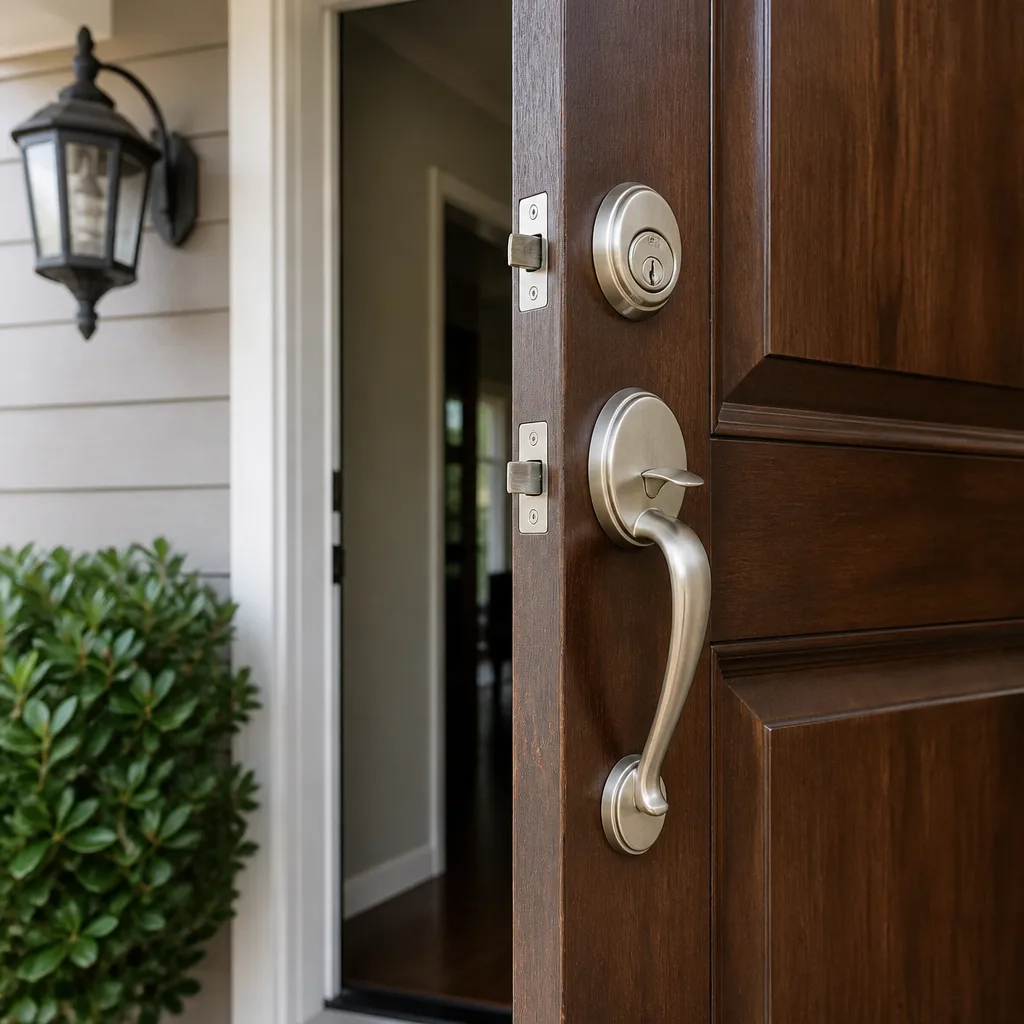
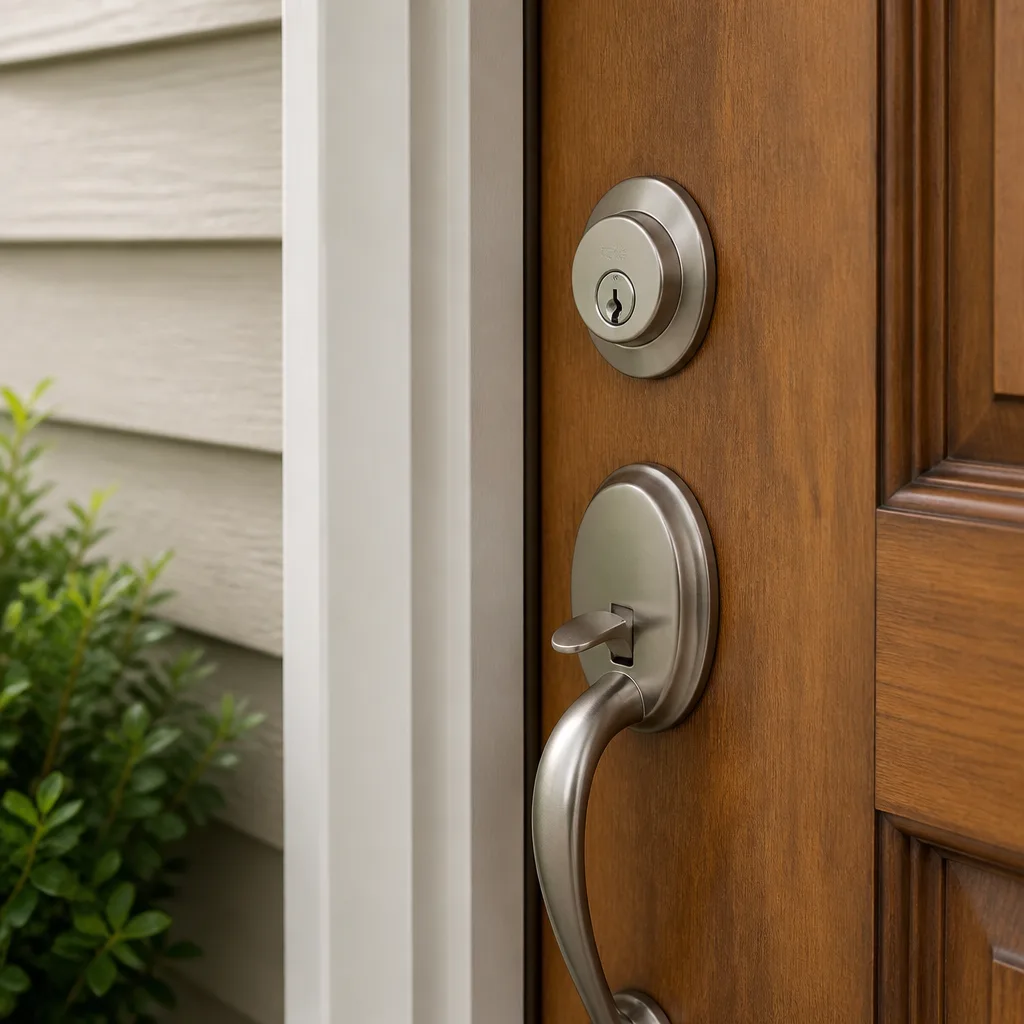
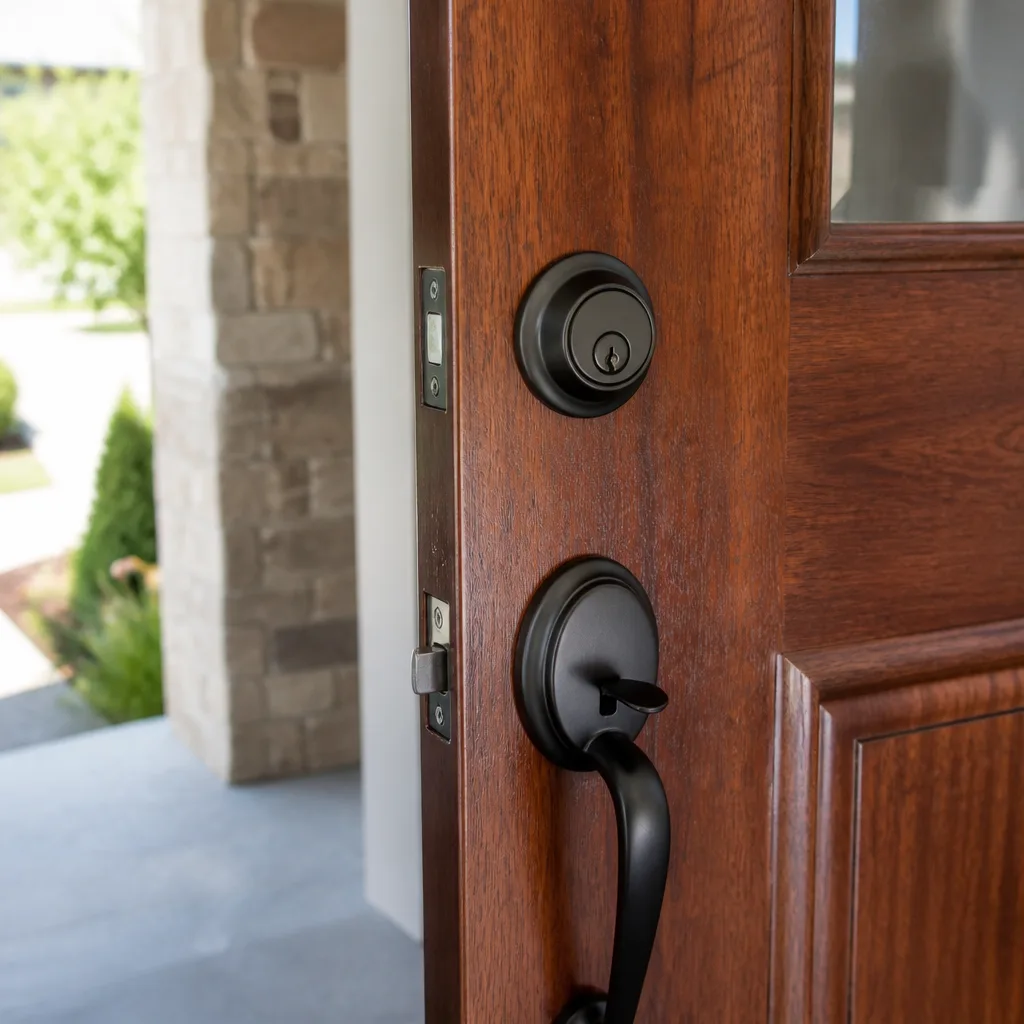
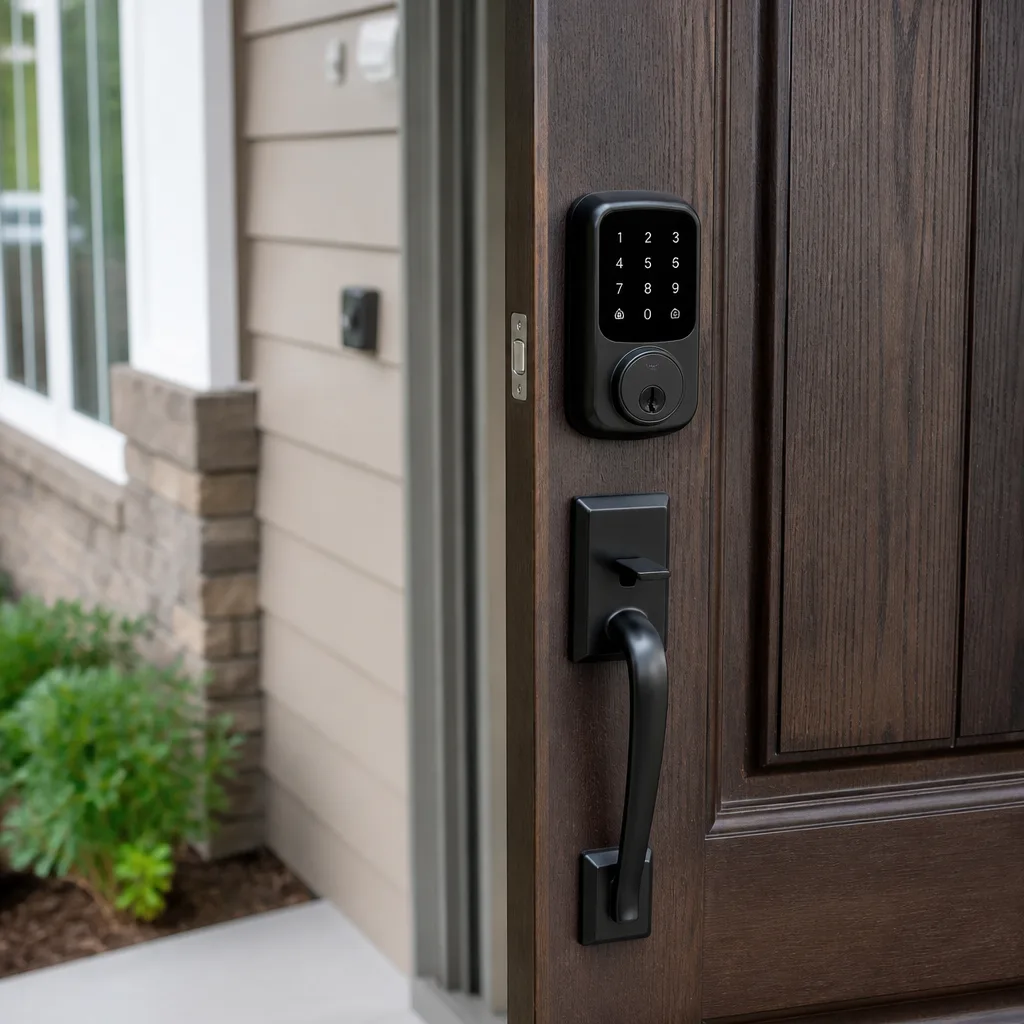
The Complete Door Lock Repair Guide for Los Angeles Homeowners
A door that “just sticks sometimes” in a 1970s Los Angeles stucco home is almost never a lock problem. It’s a frame problem wearing a lock symptom. The house has shifted. The aluminum frame has flexed. The salt air has done its quiet work on the latch. And somewhere along the way, the homeowner has been sold a new deadbolt when what they actually needed was someone who understood how LA houses move, settle, and corrode. This guide explains what actually breaks on door locks in Los Angeles, what it costs to fix, and how to avoid paying for repairs that don’t address the real problem. For more guides & resources, visit our blog.
Quick Answer
Our Door Lock Repair services in Los Angeles typically cost between $75 and $280 depending on whether the issue is a worn internal mechanism, a misaligned strike plate, or frame settlement. Most repairs take under an hour and can be completed same-day. The key to lasting repair in LA is diagnosing whether the lock itself failed or whether the door and frame shifted around the lock, which requires a different fix entirely.
Table of Contents
- Why Los Angeles Door Locks Fail Differently
- Lock Types in LA Housing Stock by Era
- Lock Mechanism Repair vs. Door-Frame Repair
- What Door Lock Repair Costs in Los Angeles
- How a Proper Lock Repair Works, Step by Step
- HOA and Gated Community Lock Restrictions in LA
- Common Mistakes to Avoid
- When to Call a Professional
- Frequently Asked Questions
Why Los Angeles Door Locks Fail Differently
Los Angeles is not a single climate. It’s at least three, and each one damages door hardware in its own way.
Within roughly five miles of the coast, salt air attacks lock internals year-round. We regularly service homes in Venice, Mar Vista, and the Palisades where a five-year-old deadbolt shows the internal corrosion you’d expect from a twenty-year-old lock in Burbank. The salt settles into the cylinder, mixes with the factory lubricant, and turns it into a gritty paste that grinds down the pins and springs. The lock doesn’t fail loudly. It just gets stiffer, then the key starts needing a jiggle, then one day the key won’t turn at all.
Further inland, in the San Fernando Valley and the foothill neighborhoods of Studio City and Sherman Oaks, the problem is heat and dust. Summer temperatures above 100°F bake the grease out of lock cylinders. The fine dust that blows through the Valley in the fall works its way into the keyway and mixes with whatever lubricant remains. The result is a lock that feels dry and scrapey, and eventually the internal springs lose tension and the latch mechanism hangs up.
But the most underdiagnosed LA lock problem is earthquake micro-shift. Southern California experiences constant small tremors, most of which no one notices. Over a decade, those micro-movements shift door frames by a fraction of an inch. Not enough to see. More than enough to move the strike plate just out of alignment with the latch. The symptom is a deadbolt that “doesn’t want to throw” or a handle that needs to be lifted or pulled to get the latch to release. A new lock won’t fix it, because the lock was never the problem.
Add to that the ubiquity of aluminum-frame doors in LA construction, especially in homes built between 1950 and 1990, and you have a recipe for lock issues that no generic repair guide addresses. Aluminum expands and contracts with temperature swings far more than wood or steel. On a hot Santa Monica afternoon, an aluminum door slab can bow outward enough that the latch no longer lines up with the strike plate, even if everything was perfectly aligned that morning.
Lock Types in LA Housing Stock by Era
Understanding what you’re working with starts with knowing when your home was built, because lock hardware in Los Angeles follows distinct eras. See The Complete Guide to Locksmith in Los Angeles for a broader overview of regional factors.
1950s to 1970s tract homes
These homes, found in vast numbers across the San Fernando Valley, Westchester, and the eastern edges of LA, were typically built with mortise locks or early tubular locksets. Many still have the original mortise lock bodies, which were heavy brass or steel units installed into a deep pocket cut into the door edge. Mortise locks are repairable, but most modern locksmiths don’t stock the internal parts, so the repair becomes a full replacement with a modern tubular deadbolt and a wrap plate to cover the old mortise pocket. Expect that retrofit to run $150 to $320 in Los Angeles labor rates, including hardware.
1980s to 2000s
This era standardized on tubular locksets, mostly Kwikset and Schlage. The deadbolt and the handle set are separate units, each with its own bore hole. These locks are the easiest and cheapest to repair, because replacement parts are universally available. The most common failure we see in this era is the tailpiece (the flat metal bar that connects the thumb turn to the bolt) wearing down or bending over decades of use. That’s a $35 to $65 part, and the repair takes about twenty minutes.
2010s and newer
Newer construction and remodeled homes in neighborhoods like Echo Park, Silver Lake, and Downtown LA frequently have smart locks or keypad deadbolts. These fail differently. The mechanical core is often fine, but the keypad, motor, or wireless module stops working. The repair approach is brand-specific: a Schlage Encode has a replaceable keypad module, while some of the budget smart locks are effectively disposable once the electronics fail. When we service these, the conversation often turns to whether to repair the electronics or replace the entire unit with something more durable, like a mechanical deadbolt with a separate smart retrofit module, which is often the better long-term play.
Lock Mechanism Repair vs. Door-Frame Repair
This is the single most important distinction in this entire guide. When a homeowner calls and says “my lock is broken,” the actual issue falls into one of two categories:
Category One: The lock mechanism itself has failed. The cylinder doesn’t turn. The key won’t go in. The thumb turn spins but doesn’t move the bolt. The latch won’t retract when you turn the handle. These are internal lock problems, and they’re fixed by repairing or replacing the lock hardware.
Category Two: The door and frame have moved. The lock turns fine, but the bolt won’t align with the strike plate hole. The door has to be pushed or pulled to get the latch to engage. The deadbolt only throws when you lift the handle. These are frame relationship problems, and no amount of lock repair will fix them permanently.
The reason this matters in Los Angeles specifically is that Category Two problems are dramatically more common here than they are in, say, Chicago or Dallas. The constant low-level seismic activity, the extreme temperature swings on south-facing doors, and the prevalence of aluminum door frames all push doors and frames out of alignment over time.
Our diagnostic approach at Preston Locksmith & Security is to test the lock mechanism first with everything disconnected from the door, then test the door and frame relationship, then determine which category the problem falls into. It’s a five-minute diagnosis that saves a lot of wasted money, because the two categories require completely different repairs. A misaligned strike plate is a $75 to $120 fix. A failed lock cylinder is a $95 to $180 fix. A warped door slab that needs planing or a frame that needs shimming is a $200 to $400 fix. We quote all three scenarios on the phone before we dispatch, so the customer knows the possibilities before we arrive.
What Door Lock Repair Costs in Los Angeles
Let’s put real numbers on this. Los Angeles labor rates for locksmith work are higher than the national average, driven by the cost of operating in the city, but the range is predictable if you know what’s being repaired.
Door lock repair cost ranges in Los Angeles:
- Cylinder replacement (key won’t turn, but the lock body is fine): $85 to $140, including parts and labor
- Strike plate realignment (deadbolt won’t throw cleanly): $75 to $110, including the plate if needed
- Handle or latch replacement (loose handle, latch won’t retract): $95 to $160, including hardware
- Full deadbolt replacement (standard Schlage or Kwikset): $120 to $200, including labor
- Mortise lock retrofit to modern tubular lock: $180 to $320, including the mortise pocket fill plate
- Frame repair with shimming (door sagging, lock no longer aligns): $150 to $280, including labor
- Smart lock diagnosis and electronic repair: $90 to $180, depending on the module
- Full door re-hang with hinge adjustment: $200 to $400 for a standard entry door
Every price above is a range, not a teaser. We don’t do the bait-price thing where you’re quoted $29 over the phone and then handed a $400 invoice. The price is written down before any work starts, and it’s the same price on the invoice. That’s the Preston Locksmith & Security standard, formally called The Relay Visibility Guarantee: a written price before work begins, a live arrival time you can track, before-and-after photos of the job, and a written guarantee on every repair.
If you’re comparing quotes from Los Angeles locksmiths, ask one question: “Is the price you’re telling me on the phone the same price I’ll see on the invoice?” If there’s any hesitation or any talk of labor being “additional,” call someone else.
How a Proper Lock Repair Works, Step by Step
Here’s what a legitimate door lock repair in Los Angeles looks like, from phone call to finished job. This is the process we follow, and it matches what any good locksmith should be doing.
- Diagnosis over the phone. We ask targeted questions: What era is the home? Is the door aluminum or wood? Does the key turn halfway or not at all? Does the deadbolt throw when the door is open but not when it’s closed? These answers tell us which of the two categories your problem falls into, lock mechanism or frame relationship, before we ever get in the truck.
- Written quote. Based on that diagnosis, we give you a price range for the likely repair scenarios. This quote is sent in writing before we dispatch anyone. You know the worst case before we arrive.
- Trackable arrival. You get a live arrival time, the same way you’d track a rideshare. You’ll see the technician’s ETA update in real time, and you’ll know their name and what they look like before they knock.
- Confirmation on site. The technician tests the lock, confirms or corrects the phone diagnosis, and gives you the final written price before pulling out a single tool. If the diagnosis changed and the price needs to change, that conversation happens before any work begins, not after.
- Repair. The work happens, including a quick lubrication of all moving parts with a dry graphite or PTFE lubricant (never WD-40, which gums up lock internals in LA’s dust).
- Photos and documentation. You get before-and-after photos of the repair. You can see what was wrong and what was fixed, even if you weren’t standing over our shoulder the whole time.
- Written guarantee. Every job gets a written guarantee, including a free second visit if the repair fails within the coverage period. The 365-Day Done Right Promise is stamped on every invoice: if it’s not done right, we make it right.
That’s the whole sequence. No phone tag, no four-hour arrival windows, no price that changes when the technician gets a look at you. If a locksmith in Los Angeles can’t describe their process in this level of detail, that’s a signal.
HOA and Gated Community Lock Restrictions in LA
If you live in a gated community, a condo building, or an HOA-governed neighborhood in Los Angeles, your lock repair has an extra layer of rules that most homeowners don’t realize until they’re in violation.
Many HOAs in areas like Brentwood, Beverly Grove, and the larger planned developments in Playa Vista and Porter Ranch have architectural guidelines that restrict lock hardware. Some require a specific finish (polished brass, oil-rubbed bronze, satin nickel) to match the community’s exterior aesthetic. Some require that all locks be keyed to a specific keyway so that the HOA or building management can access units in an emergency. A few high-end communities require specific brands, often Baldwin or Mul-T-Lock, for all exterior hardware.
What this means practically: before you replace a lock in an HOA-governed property, check your CC&Rs. If you install a Kwikset deadbolt in a community that mandates Baldwin, the HOA can require you to remove it at your own expense. We’ve seen that exact scenario play out more than once.
The workaround is straightforward. Most HOAs allow internal rekeying or cylinder replacement without approval, because the visible hardware doesn’t change. It’s a good option if you’ve lost a key or a previous resident may still have access. Read The Complete Rekey Locks Guide for Los Angeles Homeowners to learn when rekeying is the right choice. If the exterior hardware absolutely must be replaced, we can match the community’s mandated brand and finish, so the new lock looks indistinguishable from the original.
For multi-unit buildings, there’s often a master key system in place, which adds a layer of complexity. A standard rekey won’t work if the building’s master key needs to operate your unit. That’s a conversation for your building management and a locksmith who understands commercial keying, like the work we cover on our commercial locksmith services page.
Common Mistakes to Avoid
- Oiling a stiff lock with WD-40. WD-40 is a solvent, not a lubricant. It temporarily loosens things, then the residue attracts dust, and you’re worse off in two weeks. In LA’s dry inland climate, that dust turns to grinding paste inside the cylinder. Use graphite powder or a PTFE-based lubricant.
- Replacing a lock when the frame is the problem. If the deadbolt turns smoothly but won’t line up with the strike plate hole, a new lock won’t help. You’re about to spend $150 on hardware when the real fix was a $90 strike plate adjustment.
- Forcing a key that doesn’t want to turn. If you apply enough torque to a half-turned key, you can shear the internal pins or break the key off in the cylinder. A key that needs to be forced is a warning sign, not a challenge.
- Buying the cheapest smart lock on the market. We see a steady stream of $49 smart locks from big-box retailers that fail within two years in Los Angeles heat and dust. A Sargent or Schlage mechanical lock will outlast nearly any budget smart lock on the market.
- Ignoring HOA rules before replacing hardware. Covered above, but worth repeating: check your CC&Rs before you drill a single hole. HOA-mandated hardware removals come out of your pocket.
- Drilling out a lock that could be rekeyed. A lost key doesn’t require a new lock. A proper rekey service swaps the internal pins so the old key no longer works, and it’s a quarter of the cost of new hardware. We see drilled-out locks all the time where a $40 rekey per cylinder would have done the job.
- Hiring a locksmith who quotes a price but won’t put it in writing. If the price only exists verbally, it doesn’t exist. The LA locksmith market has a well-documented bait-pricing problem. Get the price in writing before the technician arrives.
When to Call a Professional
Some repairs are genuinely DIY-appropriate: lubricating a stiff lock, tightening a loose handle set screw, or adjusting a hinge with a screwdriver. But the moment a lock requires removal of the cylinder, work on the door frame, or a diagnosis involving multiple possible failure points, it’s time to call a professional. A locksmith who’s seen 5,000 Los Angeles doors knows within minutes whether the problem is a $12 spring or a shifting foundation. A homeowner guessing can spend an entire afternoon and still be wrong. If the key won’t turn, if the deadbolt won’t throw, or if the door has to be muscled to latch, call someone. Preston Locksmith & Security offers free estimates in Los Angeles – call (409) 405-4485.
Frequently Asked Questions
A door lock that keeps sticking in Los Angeles is usually sticking because of one of three local conditions: salt air corrosion near the coast, dust and heat drying out the lubricant in inland neighborhoods, or door frames shifting out of alignment due to constant low-level seismic activity. The fix depends on which condition applies to your specific neighborhood, but it often involves cleaning and re-lubricating the cylinder, and in many cases a strike plate realignment. Call (409) 405-4485 for a free diagnosis over the phone.
A door lock repair in Los Angeles costs between $75 and $280 for most residential jobs, depending on the failure point. Simple cylinder replacements run $85 to $140. Strike plate realignments run $75 to $110. Full deadbolt replacements with hardware and labor run $120 to $200. The price is confirmed in writing before any work starts.
Yes, at Preston Locksmith & Security, the price we quote on the phone is a written price for the specific repair scenario, and the final written price is confirmed on site before any tool comes out. If the diagnosis changes and the price needs to change, that conversation happens before the work starts. You’ll never see a number on the invoice that wasn’t agreed to in advance.
In most Los Angeles neighborhoods, we can have a technician on site within 60 to 90 minutes, and you get a live trackable arrival time so you know exactly when we’ll be there. Our phones are answered by a live person 24/7, so you’re never waiting on a callback for an emergency.
Most lock problems in Los Angeles homes can be repaired, not replaced. Internal cylinder components, tailpieces, latches, and strike plates are all replaceable parts, and repair is usually 40% to 60% cheaper than full new hardware. The exceptions are cheap locks that were poorly made, locks that have sustained physical damage, and some budget smart locks where the electronics have failed and replacement modules cost more than a new lock.
Yes. Many HOAs in Los Angeles, especially in gated communities and planned developments, have architectural guidelines that restrict lock brands and finishes, and some require all exterior locks to be keyed to a specific keyway so building management can access units in an emergency. Check your CC&Rs before replacing any exterior lock hardware. If you’re restricted, internal rekeying or cylinder replacement usually complies with HOA rules because the visible hardware doesn’t change.
The Bottom Line
Los Angeles door locks fail for reasons that have almost nothing to do with the lock itself: salt air along the coast, heat and dust in the Valley, and a constant low-level seismic shift that moves doors and frames out of alignment. The repair that lasts is the one that correctly identifies whether the failure is in the mechanism or in the relationship between the door and its frame. Prices in LA are predictable if the diagnosis is honest: $75 to $280 covers nearly every residential door lock repair scenario. Get the price in writing before the work starts, ask about the guarantee, and don’t replace what should be repaired.
Written by Kevin Yoon, Owner at Preston Locksmith & Security, serving Los Angeles since 2008.