
Last updated October 9, 2026
Non-destructive entry first, always - and we re-key Schlage, Kwikset, and Baldwin locks on the spot while you watch
You get a price before we start. It does not change when we arrive. No surprises.
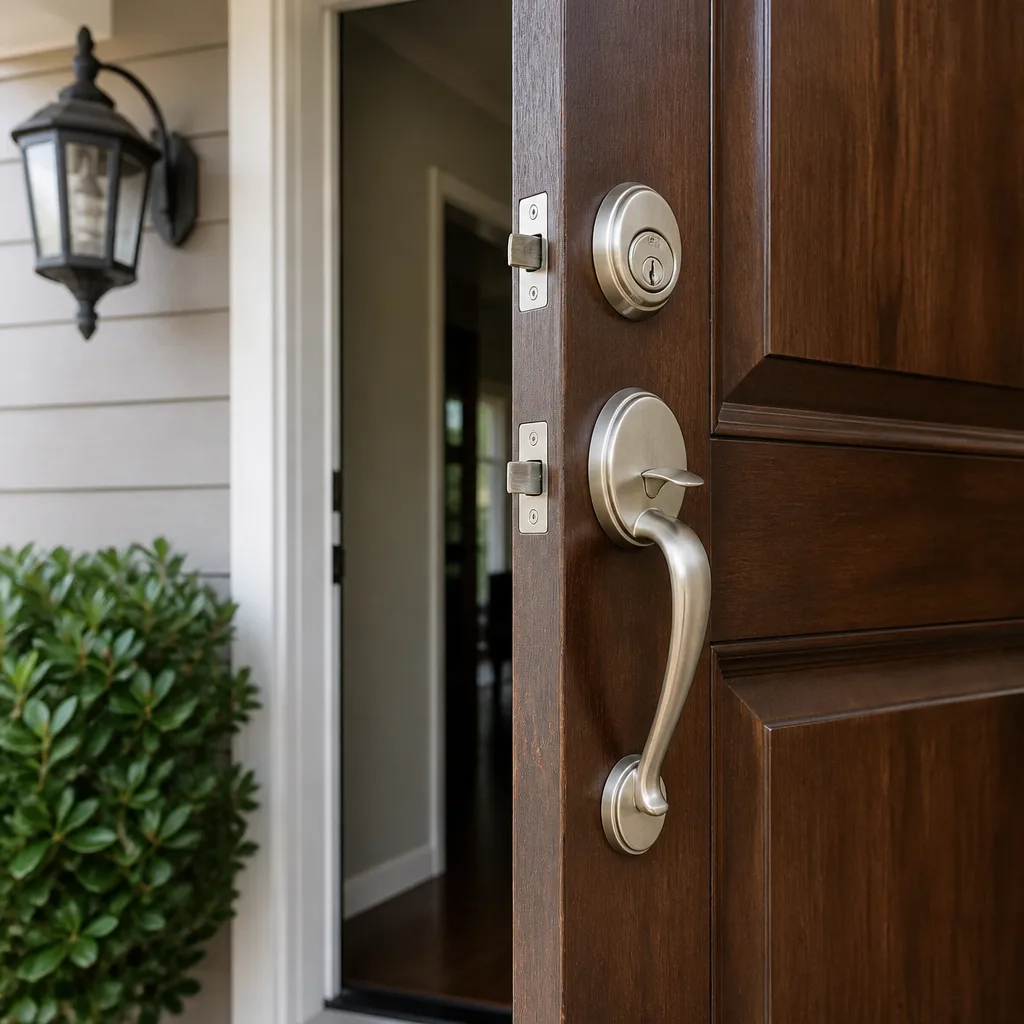
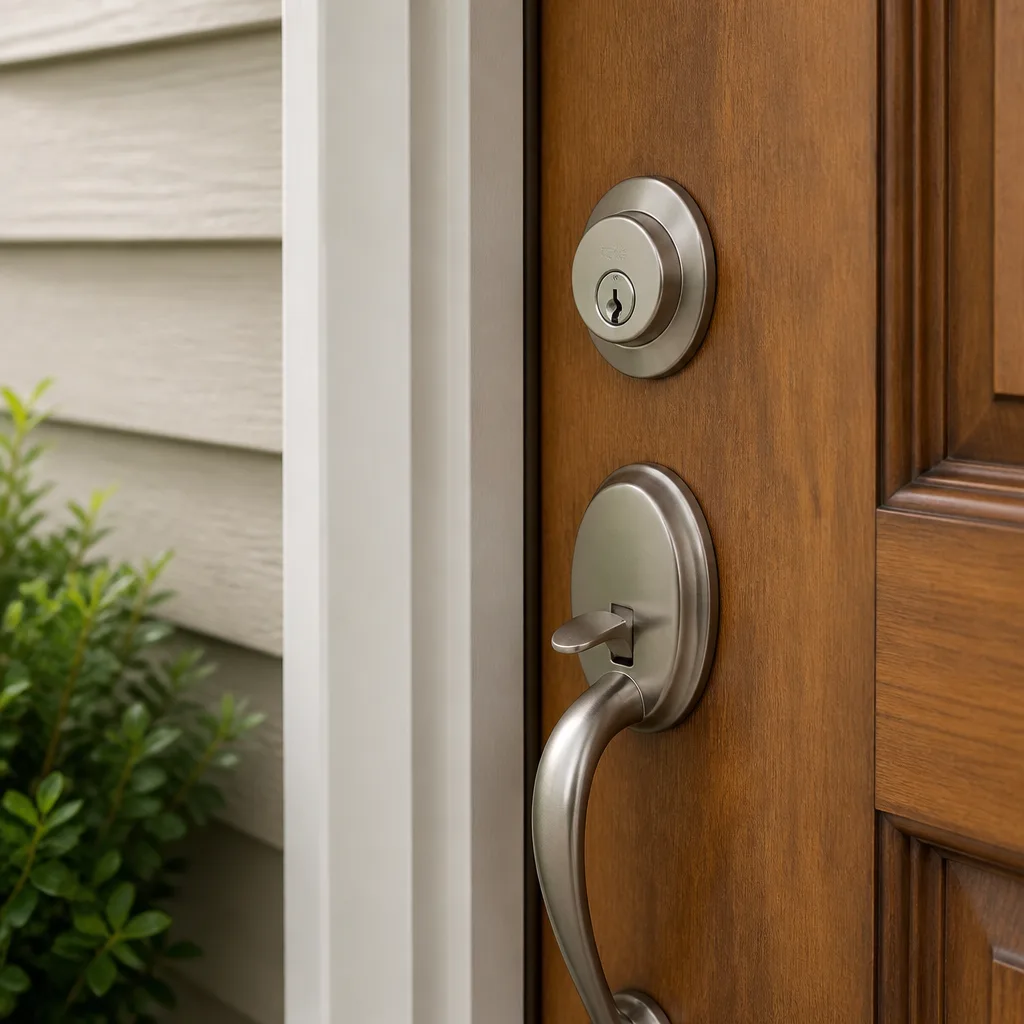
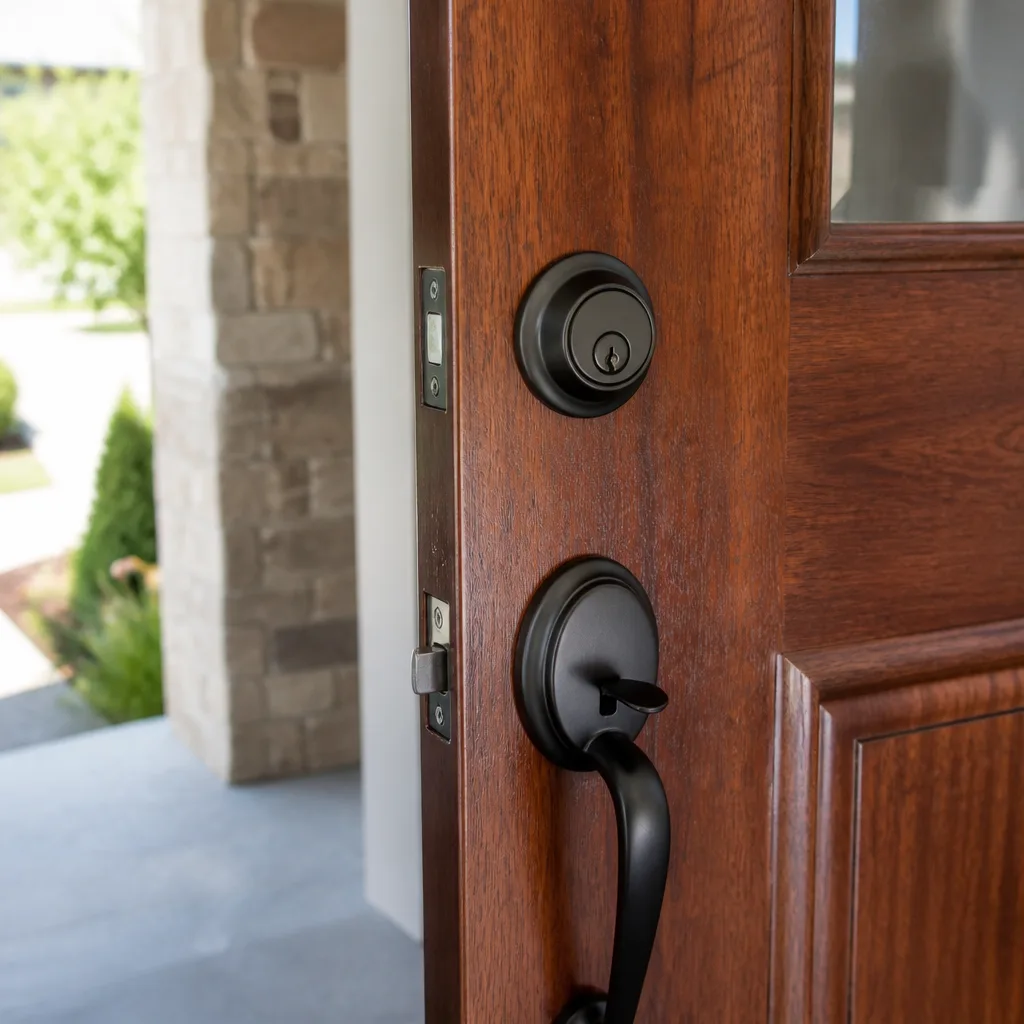
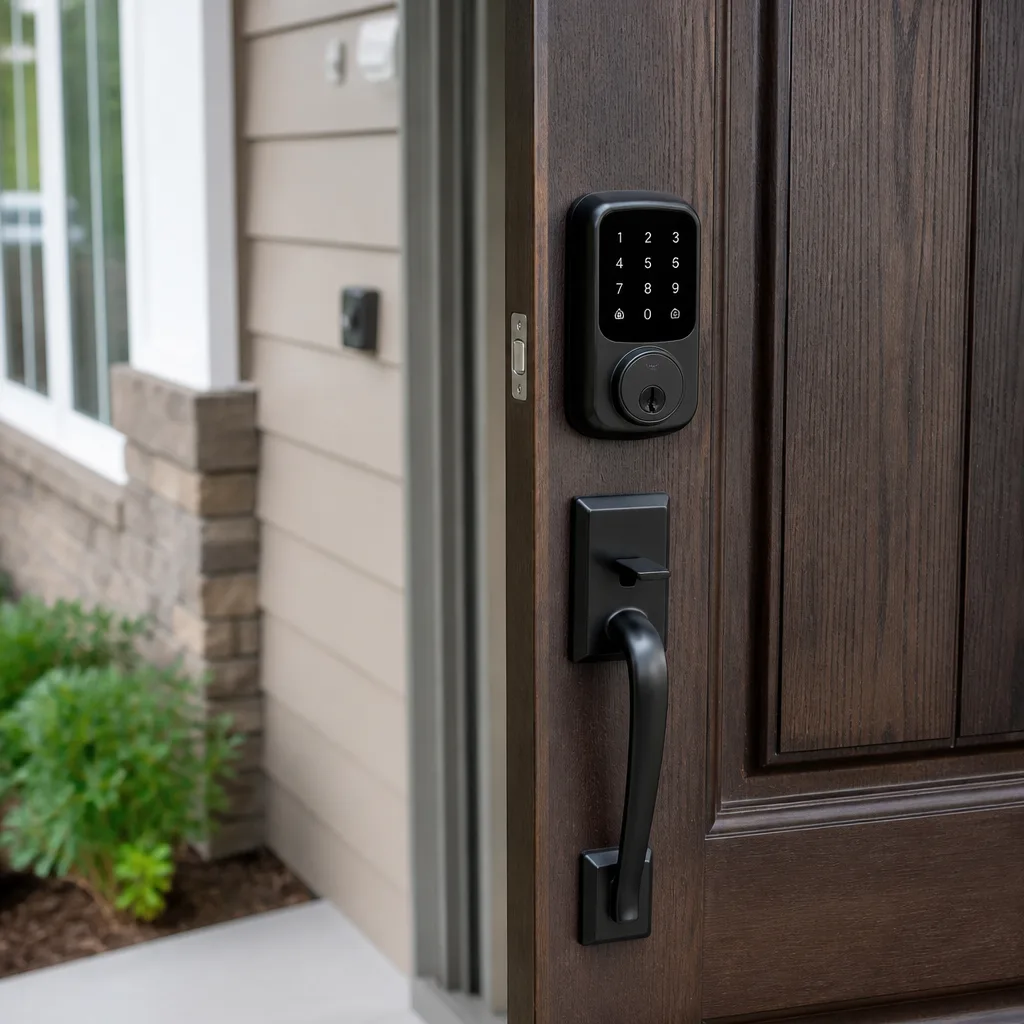
How to Hire a Locksmith Contractor in Los Angeles: A Step-by-Step Guide
The most common locksmith scam in Los Angeles starts with a $15 online ad and ends with a $400 invoice for a job that was quoted at $35 over the phone. It works because most people hire in a panic, standing outside a locked car on Sunset Boulevard or a locked apartment in Koreatown at 11 p.m., with zero process and a phone battery at 8%. This guide-along with our Locksmith Emergency Preparedness Guide for Los Angeles Homes-slows that two-minute panic call down to seven verifiable steps that filter out unlicensed operators before anyone shows up at your door. By the time you finish reading, you’ll know exactly how to verify a license, what a legitimate written quote must include, and how to confirm the person at your door is the person you hired.
Quick Answer
To hire a locksmith contractor in Los Angeles, verify their California BSIS license number on the Bureau of Security and Investigative Services website before requesting a quote, ask four specific screening questions over the phone, demand a written quote that separates labor, parts, service call fees, and after-hours surcharges, and confirm the technician’s identity at the door with a badge, uniform, and company vehicle. A legitimate Los Angeles locksmith will answer a live call, provide a physical company address, and put the price in writing before a single tool leaves the bag.
Table of Contents
- Step 1: Verify the California BSIS License Before You Ask for a Quote
- Step 2: The Four Questions a Scam Operation Cannot Answer Correctly
- Step 3: What a Legitimate Written Quote Must Include
- Step 4: Confirming the Technician’s Identity at the Door
- Step 5: Before-and-After Documentation and Why It Matters
- Step 6: Understanding Los Angeles Lock Types and Hardware Brands
- Step 7: The Guarantee Question – What Happens If the Repair Fails
- Common Mistakes to Avoid
- When to Call a Professional
- Frequently Asked Questions
- The Bottom Line
Step 1: Verify the California BSIS License Before You Ask for a Quote
California requires every locksmith to hold a license issued by the Bureau of Security and Investigative Services, commonly called BSIS, and you can learn more about the regulatory landscape in our Locksmith Permits, Codes & Inspections in CA: What You Need to Know. This is not optional, and it is not a city-level formality. A BSIS license means the individual passed a background check and operates under state scrutiny. In Los Angeles, where unlicensed operators work out of rented vans and cycle through burner phones, checking this single credential eliminates a large share of the risk before you even make the call.
Here is the process, in order:
- Go to the BSIS license lookup page at search.dca.ca.gov.
- Enter the company name or the license number the locksmith provides.
- Confirm the license status says “Current” or “Active” – not expired, not suspended.
- Verify the business name on the license matches the name on the website or the truck that shows up.
A valid California locksmith license number starts with “LCO” followed by five or six digits. If a company hesitates to give you the number, says it is “being renewed,” or claims licensing is not required, end the call. In our experience serving Los Angeles since 2008, legitimate shops volunteer the number without being asked.
One more thing: a real locksmith has a physical address in or near Los Angeles. It does not have to be a storefront, but it does have to be verifiable. If the only contact method is a cell phone and the address on the website is a P.O. box in Van Nuys, that is a red flag. Preston Locksmith & Security home lists a real Los Angeles location, and we answer the phone with a live person 24/7, no voicemail tree.
Step 2: The Four Questions a Scam Operation Cannot Answer Correctly
Once you have a license number in hand, call the locksmith and ask four specific questions. A legitimate operation answers all four without pause. A scam operation stumbles on at least two, and that stumble is your signal to hang up.
Question 1: What is your license number?
You already know the answer from your BSIS lookup. A real locksmith recites it. A scammer says “let me get back to you on that” or gives a fake number that does not match.
Question 2: What is your physical company address?
Ask for the street address, not the cross streets. A legitimate business gives you a real address in Los Angeles, whether that is a shop in Silver Lake or an office in the Valley. A scam operation gives you a P.O. box, a Starbucks, or nothing at all.
Question 3: Do your technicians wear uniforms and carry company ID?
Every legitimate locksmith we know in Los Angeles sends uniformed, background-checked technicians who carry photo ID with the company name on it. If the person on the phone laughs, says “it’s just a guy in a truck,” or hedges, you are talking to a dispatch service that will sell your job to the lowest bidder. Kevin Yoon, who runs Commercial Locksmith in Los Angeles work for Preston, has built the entire operation around uniformity: background-checked techs, a branded vehicle, and a photo of the technician sent before arrival.
Question 4: Will you put the full price in writing before any work starts?
This is the question that separates the professionals from the bait-pricers. The correct answer is yes, with no qualifications. If the answer is “depends on what we find” without a framework for how that gets priced, or “we’ll figure it out when we get there,” walk away. The price should be agreed and written before a tool leaves the bag.
Step 3: What a Legitimate Written Quote Must Include
A real written quote is not a text message that says “lockout $35.” It is a line-item breakdown that separates the service call fee, the labor, the parts, and any after-hours surcharge. In Los Angeles, where a lockout in West Hollywood at 2 a.m. costs more than a rekey in Pasadena at 2 p.m., that after-hours line matters.
Here is what the quote should list, separately:
- Service call fee: The base charge for the technician to come to you. In Los Angeles, this typically runs $35 to $75 during business hours and $75 to $150 for late-night or weekend calls.
- Labor: The per-hour or per-job rate for the actual work. Rekeying a standard lock, for example, usually runs $20 to $40 per cylinder in labor, depending on the brand and the neighborhood.
- Parts: Any new hardware, pins, keys, or lock bodies. A standard Schlage deadbolt replacement part might run $40 to $90, while a high-security Mul-T-Lock cylinder can run $150 to $300, depending on the model.
- After-hours surcharge: If the call is outside normal business hours, this is a line item, not a surprise. It should be quoted as a specific dollar amount, not a percentage-somewhere-between-ten-and-forty.
The full price is quoted on the phone before anyone is dispatched, and that is the price on the invoice. No call-out surcharge added on arrival. No “it was harder than expected” premium. If the job genuinely requires more work than quoted, the technician should stop, explain the change, and get approval before proceeding, with a revised written quote.
Step 4: Confirming the Technician’s Identity at the Door
The person who arrives at your door in Los Angeles should match the person you were told was coming. This is not paranoia. It is the difference between letting a vetted professional into your home and letting a stranger with a drill bit case into your home.
Before opening the door, check for three things:
- Company uniform: The technician should be wearing a shirt or jacket with the company name and logo on it. Not a plain hoodie. Not a baseball cap from a brand that does not exist.
- Photo ID badge: The badge should have the technician’s name, the company name, and a photo. In Los Angeles, BSIS-licensed locksmiths are required to carry their license on them. Ask to see it.
- Company vehicle: The truck or van should have the company name and phone number on the door or the side. A magnetic sign that looks like it was printed this morning is not a good sign, though some independent operators do use magnetic signs on leased vehicles. The key is that the name on the vehicle matches the name on the license and the name on the quote.
At Preston Locksmith & Security, we send background-checked, uniformed technicians in branded vehicles, and we send the technician’s photo and live arrival time to your phone before he knocks. This is part of The Relay Visibility Guarantee: a written price before work begins, a live trackable arrival time, before-and-after photos of every job, and a written guarantee on every repair.
Step 5: Before-and-After Documentation and Why It Matters
Most locksmith work is invisible after the fact. The lock works or it does not. The deadbolt turns or it does not. But for any lock replacement, rekey, or repair on a property you own or rent, documentation matters for two reasons: insurance and warranty.
If you ever file a claim related to a break-in, a forced entry, or a lock failure, your insurance company will ask for documentation of the lock’s condition and the work performed. A receipt is not enough. You need photos.
What legitimate before-and-after documentation looks like:
- Before photos: The condition of the lock, the door frame, the strike plate, and the surrounding area before work begins. These establish the pre-existing condition and prove what was replaced.
- After photos: The new lock, the deadbolt, the repaired strike plate, and the finished hardware. These prove the work was completed and shows what was installed.
- Written summary: A short note describing the work: “Replaced Schlage deadbolt with Kwikset 980 deadbolt, rekeyed two cylinders to match, adjusted strike plate.”
At Preston, before-and-after photos are part of The Relay Standard on every job, not an upsell. You get them in a digital invoice with a pay link, so the documentation lives in your email and not in a paper folder that disappears. For any Door Lock Repair in Los Angeles job, this is the difference between a warranty you can enforce and a phone number that no longer answers.
Step 6: Understanding Los Angeles Lock Types and Hardware Brands
Los Angeles housing stock runs from 1920s Spanish Revival bungalows in Highland Park to 2020s glass towers in Downtown LA. The lock on your door depends heavily on when your building went up and who renovated it since. Knowing the basics helps you talk to any locksmith without sounding like a mark, and it helps you understand why a quote is what it is.
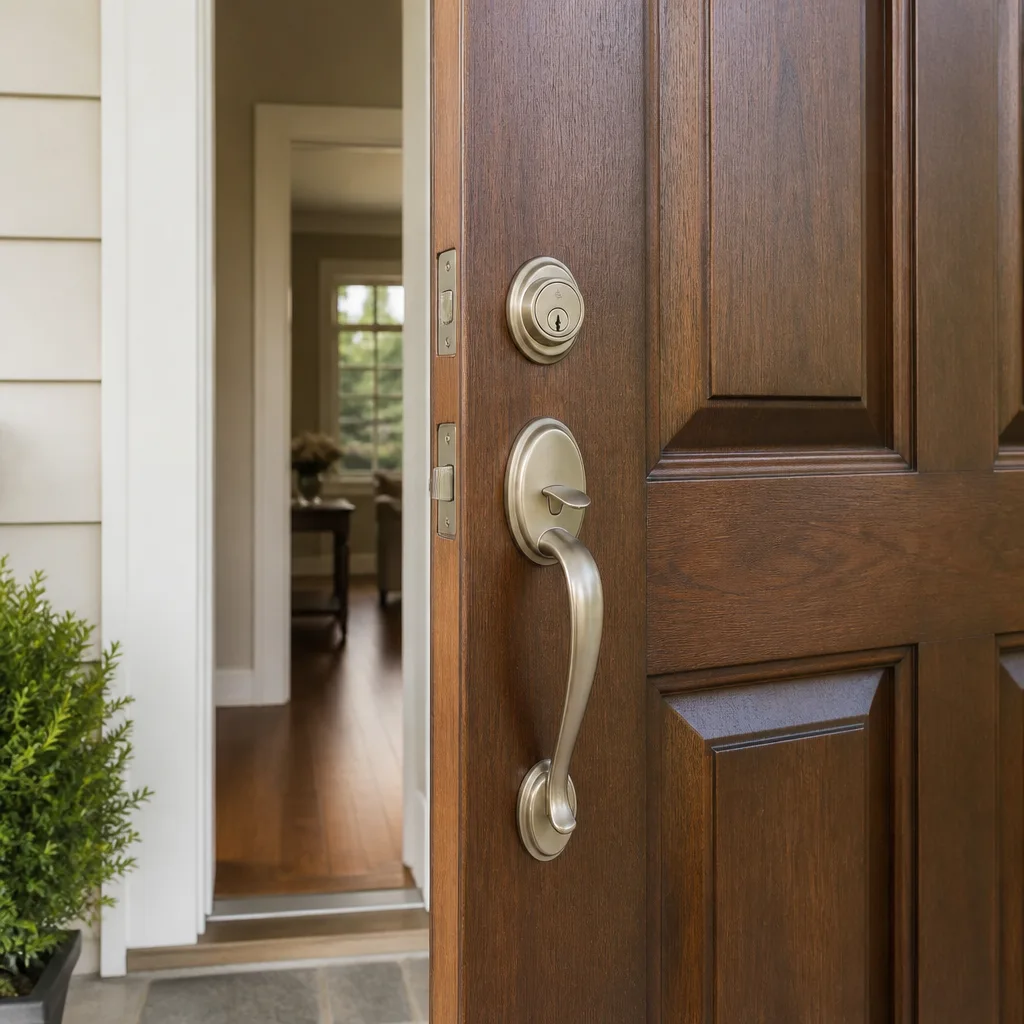
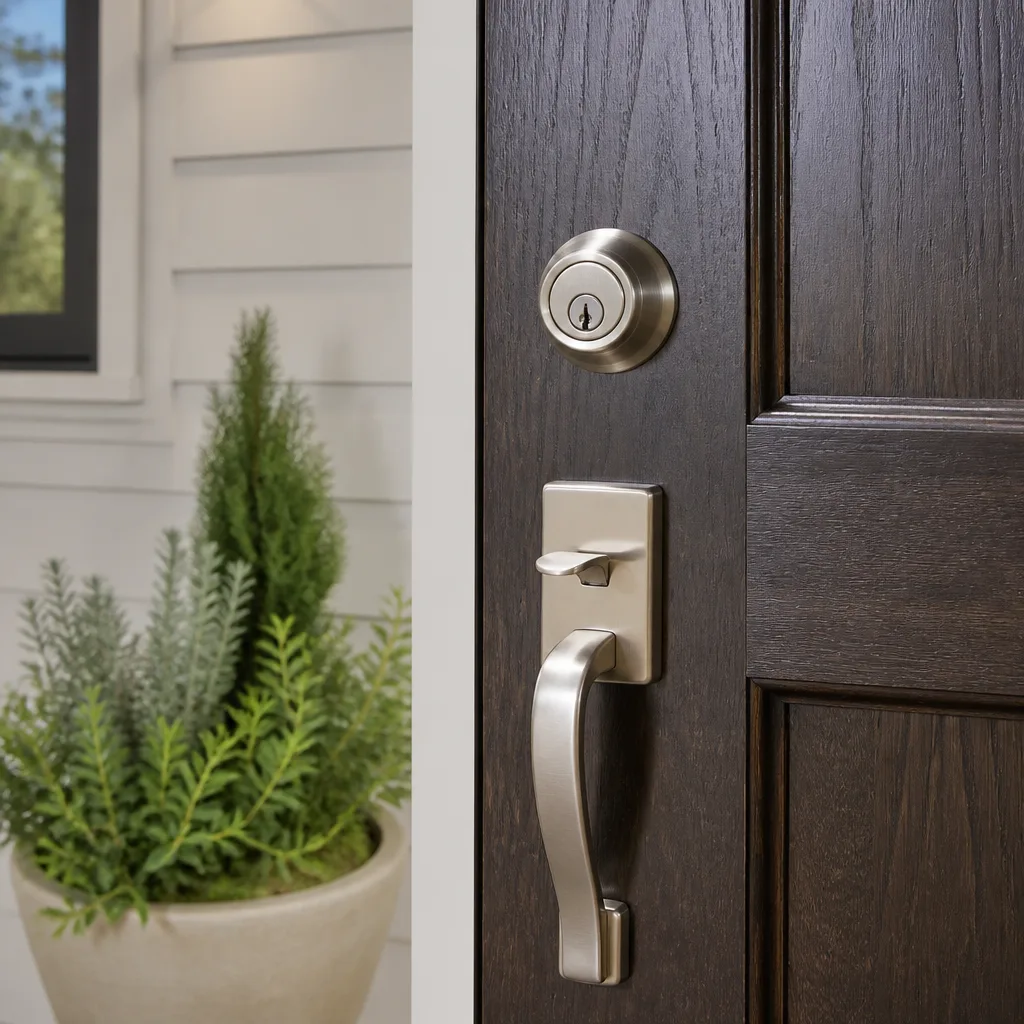
The most common residential hardware in Los Angeles is Schlage and Kwikset, the two brands you will find at every Home Depot and on most single-family doors. Both are solid, both are serviceable, and both are easy to rekey. Rekey Locks in Los Angeles work on these brands typically runs $20 to $40 per cylinder in labor, plus the cost of new keys, which is usually under $10 per key.
Higher-security hardware shows up in specific situations: landlords in multi-unit buildings often install Mul-T-Lock or Medeco cylinders because the keys cannot be duplicated at a hardware store, which prevents unauthorized copies. Homeowners with Baldwin hardware, common in higher-end Los Angeles neighborhoods like Brentwood and Pacific Palisades, often need a locksmith who actually stocks or can source those exact mortise cylinders, because they are not interchangeable with Kwikset in any way. Sargent hardware, common in older commercial buildings in Downtown LA, is another brand that requires a trained hand, not a guy with a drill.
If you have a high-security lock from Mul-T-Lock, Medeco, or Abloy, mention it on the phone before you book. Not every Los Angeles locksmith carries the tools or the authorization to service those brands, and the last thing you want is a technician who discovers this standing at your door.
Step 7: The Guarantee Question – What Happens If the Repair Fails
The final step is the one most people skip because they are already relieved to have the door open. Ask the locksmith what happens if the repair fails. Not “if you are unhappy,” but if the lock physically stops working three months after the job.
A legitimate answer sounds like a policy. Something like: “We guarantee our work. If the lock we installed or repaired fails within the warranty period, we come back and fix it at no charge.” A scam answer sounds like a shrug: “Well, it was working when we left.”
At Preston Locksmith & Security, the answer is the 365-Day Done Right Promise. If it is not done right, we make it right, backed by a written guarantee stamped on every repair. That includes a free second visit if the repair fails, no charge, no argument. The guarantee is printed on the invoice, not promised in a voicemail.
This is the step that closes the loop on everything else: a verified license, a written quote, a confirmed technician, documented work, and a written guarantee. If a locksmith passes all seven steps, you have hired well. If they fail one, you have not.
Common Mistakes to Avoid
- Calling the first number in the Google ad without checking the license. The top paid results in Los Angeles are frequently national dispatch services that sell your job to an unlicensed subcontractor. Check BSIS before you call.
- Accepting a verbal quote over the phone without a line-item breakdown. “It’ll be around $35” is not a quote. A quote is labor, parts, service call fee, and after-hours surcharge listed separately, in writing.
- Letting the technician start work before you confirm the price in writing. Once the drill comes out or the lock comes apart, you have lost leverage. The price is written before the first tool leaves the bag, or the job does not start.
- Not asking for proof of identification at the door. A legitimate technician carries a company badge with a photo. If there is no badge, there is no work.
- Skipping the BSIS verification because you are in a hurry. That is the moment the scam is designed for: locked out, late for work, standing in a parking lot in Culver City. The two minutes it takes to check the license on BSIS is the cheapest insurance you will ever buy.
- Paying cash without a receipt or documentation. Cash jobs with no paper trail are how unscrupulous operators dodge accountability. Always get a written invoice, even for a simple lockout.
- Hiring based on price alone. The $35 lockout in Los Angeles is not $35. It is $35 to get the truck rolling, plus $150 for labor, plus $80 for a drill bit you did not need. Honest pricing sounds honest: a real service call fee, real labor, real parts, no surprises.
When to Call a Professional
A stuck deadbolt on a rental in Echo Park, a lockout on a Saturday morning in Santa Monica, a commercial storefront in the Arts District that needs rekeying before a tenant changeover: these are all jobs for a licensed locksmith with the right tools and the patience to do it without damaging the door. Some projects are genuinely dangerous to attempt without training, especially anything involving high-security cylinders or commercial door hardware under tension. If the lock is on a fire door, a security gate, or any door that is part of a building’s egress system, do not touch it yourself. A trained professional knows how to service the hardware without compromising the fire rating or the code compliance. Preston Locksmith & Security offers free estimates in Los Angeles, call (409) 405-4485.
Frequently Asked Questions
In Los Angeles, a standard residential lockout typically runs $75 to $150 during business hours and $150 to $300 for after-hours calls; see our Locksmith Cost Breakdown: The Los Angeles Homeowner’s Reference for 2026 for deeper pricing context. Rekeying runs $20 to $40 per cylinder in labor plus the cost of new keys. A full deadbolt replacement with parts typically runs $120 to $250, depending on the brand and the neighborhood. Call (409) 405-4485 for an exact quote before anyone is dispatched; estimates are free and the written price is the price on the invoice.
Yes, at Preston Locksmith & Security, the written price quoted on the phone is the price on the invoice, with no call-out surcharge added on arrival. If unforeseen work is required beyond the original scope, the technician explains it and gets written approval before proceeding. Call (409) 405-4485 for an exact quote; estimates are free.
Go to the BSIS license lookup page at search.dca.ca.gov and enter the company name or the license number, which starts with “LCO” followed by five or six digits. Confirm the license status says “Current” or “Active” and that the business name matches the name on the website and the truck at your door.
Response times in Los Angeles vary by neighborhood and time of day, but most legitimate locksmiths aim for 30 to 60 minutes for urgent lockouts in central areas like Hollywood, Koreatown, and Downtown LA. Preston Locksmith & Security gives you a live trackable arrival time with The Relay Visibility Guarantee, so you watch the technician’s progress instead of staring at a four-hour window. Call (409) 405-4485 for a current arrival estimate.
Rekeying is almost always the better choice after moving into a new home in Los Angeles. Rekeying means swapping the internal pins so old keys no longer work, and it typically costs $20 to $40 per cylinder, which is significantly less than replacing hardware. Replace locks only when the hardware is physically worn, damaged, or you want to upgrade to a higher-security brand like Mul-T-Lock or Medeco. Call (409) 405-4485 for a rekey quote; estimates are free and the price is in writing before work starts.
The 365-Day Done Right Promise covers any repair or installation that fails within 365 days of the work. If it is not done right, Preston Locksmith & Security makes it right, backed by a written guarantee stamped on every repair, including a free second visit if the repair fails. The guarantee is printed on the invoice, not promised in a voicemail. Call (409) 405-4485 to talk through what the guarantee covers for your specific job.
The Bottom Line
Hiring a locksmith in Los Angeles does not have to be a gamble. Verify the BSIS license on search.dca.ca.gov. Ask the four screening questions. Demand a written quote that separates labor, parts, service call fees, and after-hours surcharges. Confirm the technician’s identity at the door with a badge, uniform, and company vehicle. Get before-and-after photos. Ask what happens if the repair fails. Seven steps, none of them complicated, and they filter out nearly every unlicensed operator in the city before anyone touches your lock.
Written by Kevin Yoon, Owner at Preston Locksmith & Security, serving Los Angeles since 2008.