
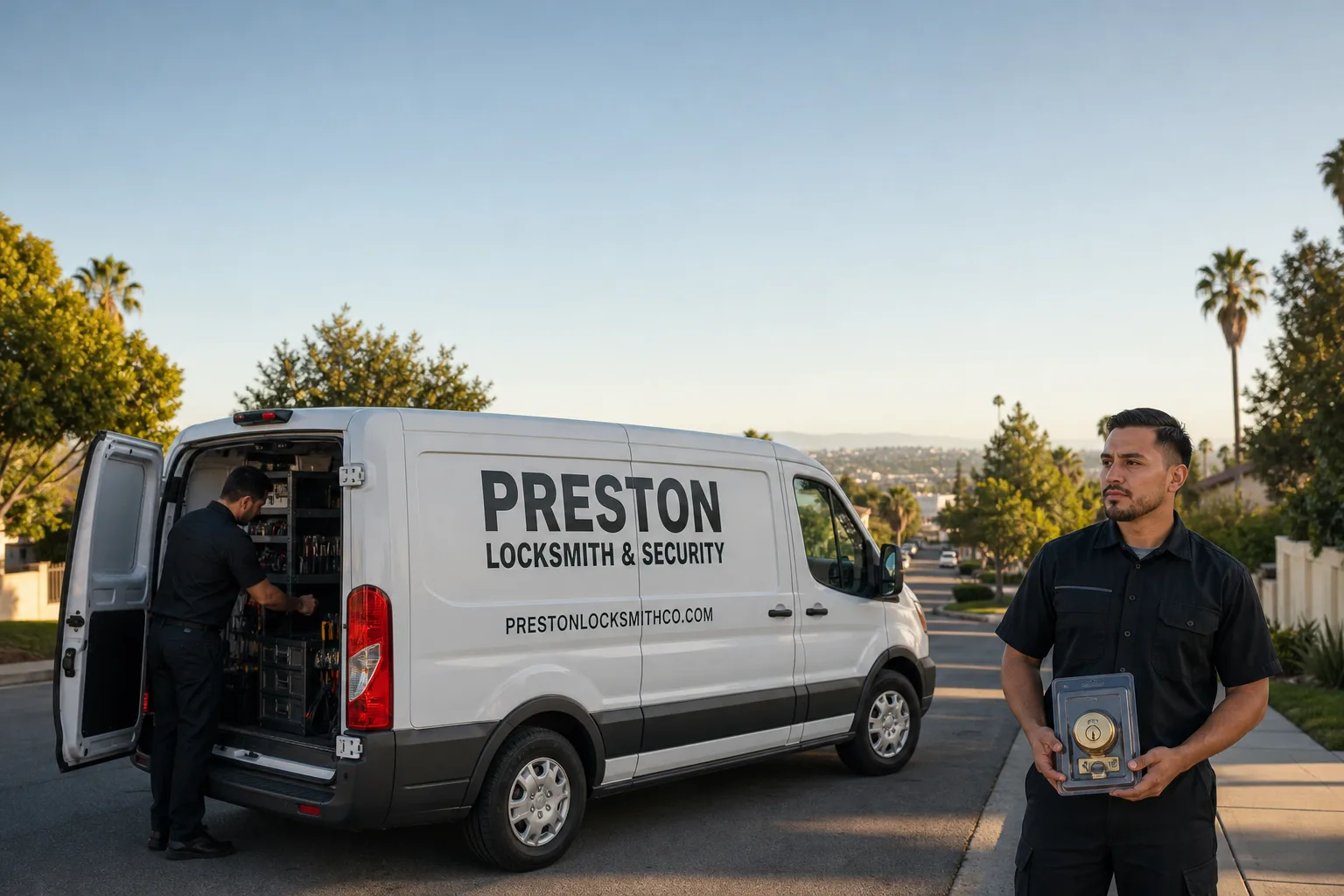
Non-destructive entry first, always - and we re-key Schlage, Kwikset, and Baldwin locks on the spot while you watch
You get a price before we start. It does not change when we arrive. No surprises.
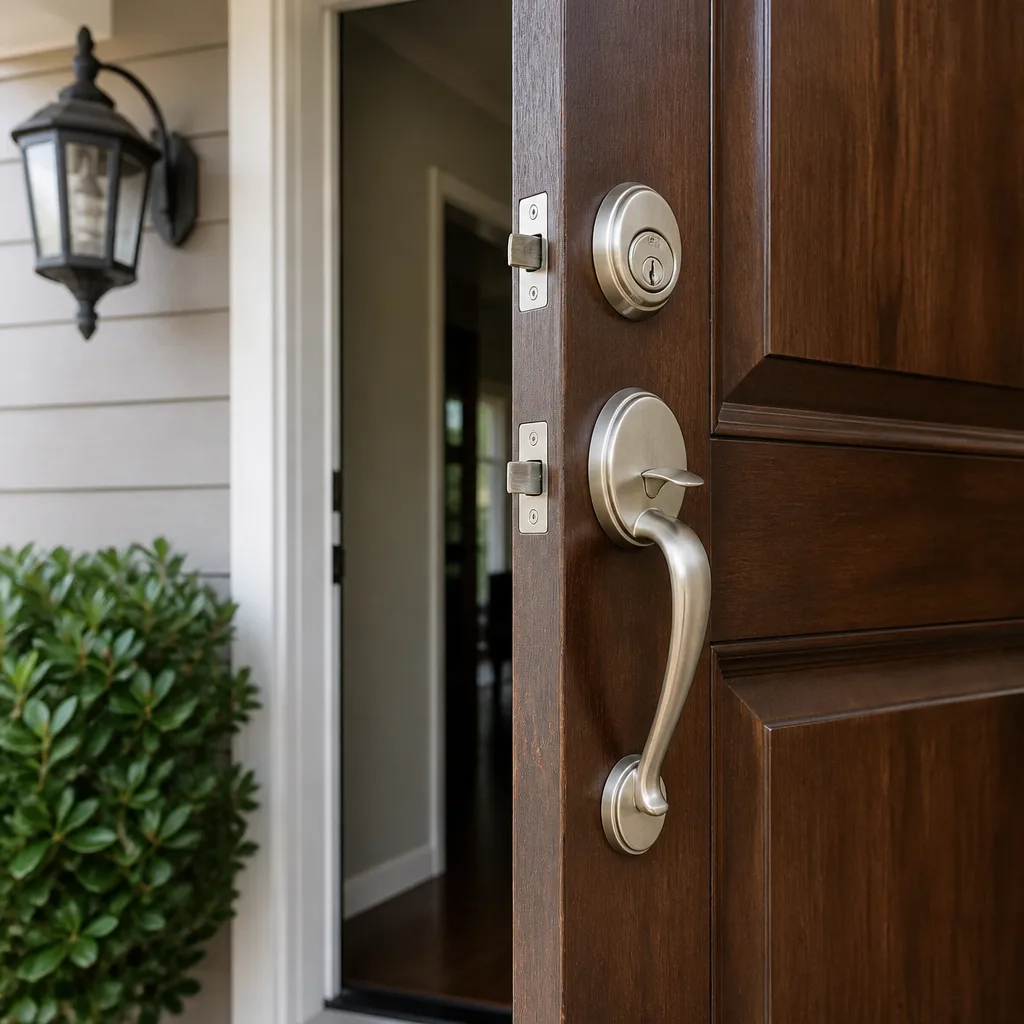
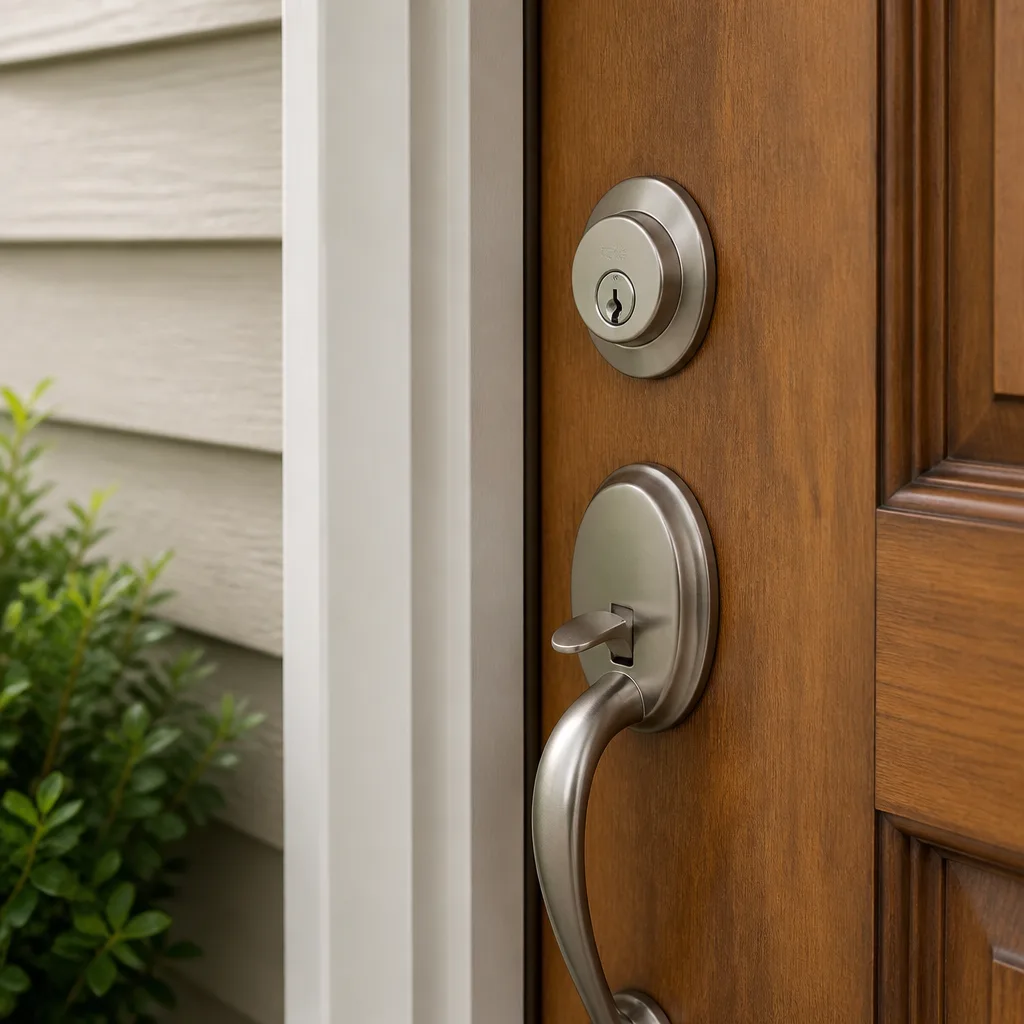
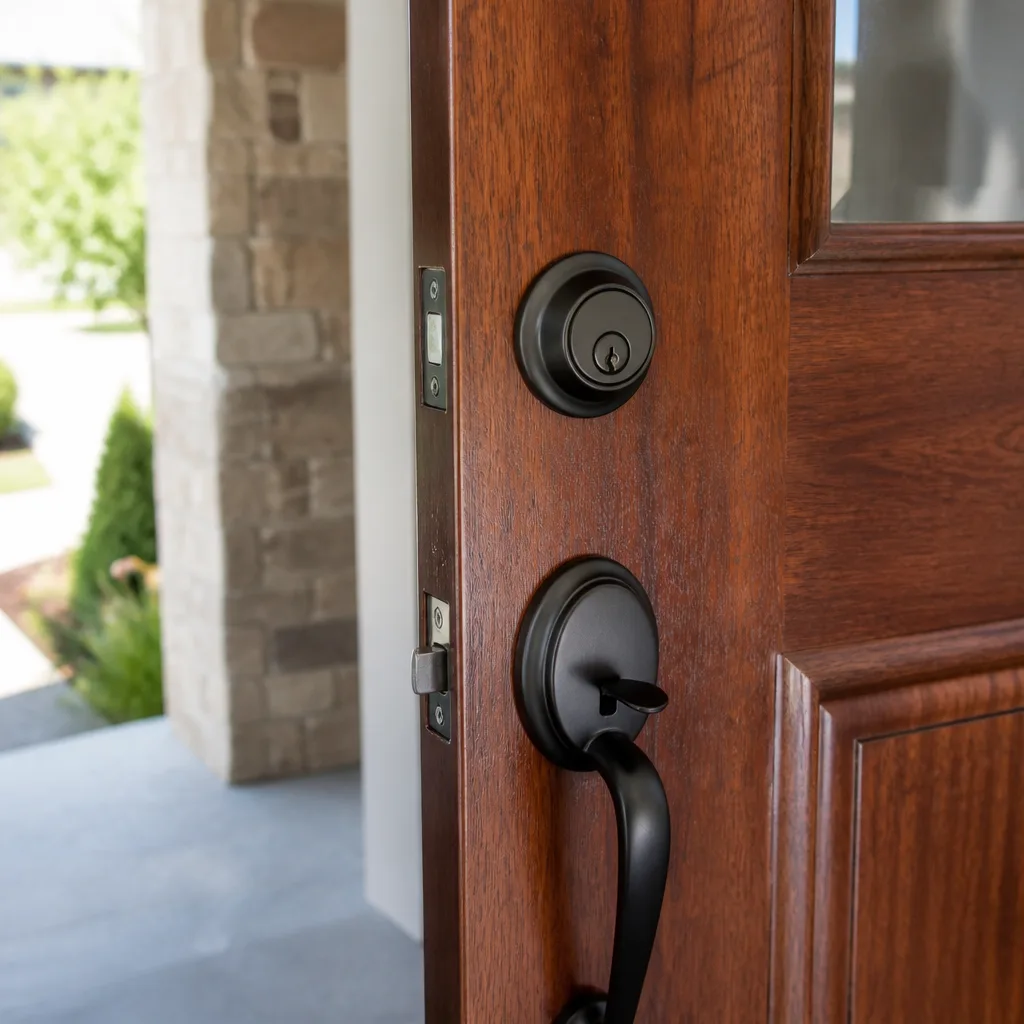
Key broke off in the lock
What’s Happening
A key that breaks off inside a lock almost always means the key or the lock cylinder – or both – had reached the end of their usable life. The break itself is the symptom, not the root problem. Getting the broken piece out and addressing whatever caused the failure is the repair.
Keys are not meant to last forever. Brass wears, bends microscopically with each turn, and eventually fatigues – especially if the key was a copy of a copy, was used to carry a heavy keychain, or was forced into a cylinder that had already started to bind. When the metal can’t take one more turn, it shears at the thinnest point, usually at the bow (the part you hold) or just inside the keyway. The fragment left behind is now lodged in the shear line of the plug, which means the lock cannot turn and, depending on how deep the piece sits, cannot accept a new key either. A technician needs to extract it cleanly before anything else happens.
Why It Happens
The key was worn or was a low-quality duplicate
Every time a key is cut, the blank loses a small amount of precision. Third- or fourth-generation copies often have shoulders and cuts that are slightly off, which means they ride the pins unevenly and put lateral stress on the blade instead of pure rotational force. You can usually spot this if the key had started feeling “grabby” or needed a little jiggle to turn before it finally broke. Schlage and Kwikset keys are especially prone to this when duplicated on worn cutting machines.
The lock cylinder had already started to seize
A cylinder that hasn’t been lubricated in years, or that has collected grit and debris in the keyway, creates resistance that the key was never designed to overcome. If you noticed the lock getting stiffer over the last several months – needing more force, sticking partway through the turn – the cylinder was already failing. The key broke because the cylinder gave it no choice.
The lock is old and the tolerances have shifted
Deadbolts and knob sets have a service life. Springs weaken, the plug wears, and the pin stacks lose their precision alignment over years of use. When the plug no longer turns smoothly on its own axis, the key carries torque it isn’t built to carry. Older Baldwin or Schlage deadbolts on exterior doors that have seen ten-plus winters of expansion and contraction are common candidates for this kind of failure.
The door or frame shifted and the bolt was binding
If the door has settled – warped from humidity, dropped from a hinge problem, or swollen in cold weather – the deadbolt may have been hitting the strike plate instead of sliding cleanly into it. Forcing the key to move a bolt that’s under physical load is one of the fastest ways to snap a blade. Look at the door frame around the strike plate: if you see fresh scratch marks, paint scraping, or the door no longer sits flush in the frame, this is likely the cause.
What to Do Right Now
- Stop turning anything. If any part of the broken key is still protruding from the keyway, resist the urge to try pliers, tweezers, or a screwdriver to dig it out. Pushing the fragment deeper makes extraction harder and can damage the pin stack inside the cylinder.
- Don’t spray lubricant into the keyway yet. WD-40 and similar sprays can temporarily gum up the cylinder and make the broken piece harder to grip cleanly. If a technician is on the way, leave the cylinder dry.
- Take a photo with your phone before you touch anything. A clear photo of the keyway – showing how much of the key is visible and at what angle – helps your local Preston Locksmith & Security team arrive prepared with the right extraction tools.
- Check whether you have another way in. A back door, a garage entry, or a neighbor with a spare key buys you time to wait comfortably rather than standing outside. If none of those apply, call now – (409) 405-4485 – rather than waiting.
- Do not attempt to pick or force the lock yourself. A broken key in the shear line means the cylinder’s pin stack is partially set in an unknown position. Forcing the plug risks bending the cylinder housing and turning a straightforward extraction into a full lock replacement.
How We Fix It
When your local Preston Locksmith & Security technician arrives, the first thing they do is assess how deep the fragment sits and whether the cylinder housing is still intact. Most broken-key extractions use a set of thin hooked picks – not the keyway itself – to grip the key’s side cuts and slide the piece out without disturbing the pin stack. The whole extraction usually takes a few minutes on a cylinder that hasn’t been damaged further.
After the fragment is out, the technician inspects the cylinder for wear, checks the door alignment, and tells you exactly what they found. If the cylinder is still in good shape, the job is done and you need a fresh key cut from the original. If the cylinder is worn or the cause was a binding door, they’ll walk you through a door lock repair or a full lock replacement on the spot.
Both of those are services your local team carries on the truck. Before any work starts, you get a written price – that is the price on the invoice, no revision at the end. The job is covered by our 365-Day Done Right Promise: if it’s not done right, we make it right, and that’s in writing.
Frequently Asked Questions
A broken key lodged in the cylinder means the lock cannot be latched or locked from that keyway, which leaves the door unsecured until the fragment is removed. If this is an exterior door – front, back, or garage entry – it should not wait overnight. Call (409) 405-4485 and your local Preston Locksmith & Security team will give you a live arrival time you can track, not a vague window.
Yes. Broken-key extractions are handled the same day in the markets we serve. When you call (409) 405-4485, a live person answers – no voicemail, no callback queue – and you’ll get a real arrival time, not a four-hour window. We track technician dispatch, so you’ll know when they’re on the way.
In many cases, the cylinder is still serviceable and all that’s needed is extraction plus a new key cut from the original. Whether replacement makes sense depends on what the technician finds inside the cylinder after the fragment is out – worn pin springs, a cracked plug, or severe corrosion are the things that push a repair toward replacement. You’ll know the answer and the price before any work starts.
The written price comes before the work starts – that is the Relay Standard and it is non-negotiable at every Preston Locksmith & Security location. The number on the estimate is the number on the invoice. There is no call-out fee added on arrival, and there is no charge for the written quote itself. If you want to know what extraction and a possible cylinder inspection will run for your specific lock, call (409) 405-4485 and ask – it costs nothing to get the number in front of you.
Get It Fixed
Call (409) 405-4485 now – a live person picks up, you’ll get a written price before anything starts, and your local Preston Locksmith & Security team will give you a real arrival time you can track. Broken key in the lock is a same-day job. We’ll have it sorted.
Written by Kevin Yoon, Owner at Preston Locksmith & Security, part of the Relay Home Co. family since 2008.
What Our Customers Say
"Showed me how to rekey a lock myself for the next time."
- Omar W."Commercial office lock replacement. Booked in the app, got a confirmation and a text with ETA. Quick and tidy."
- Jake L."Re-pinned the locks at our rental. Convenient and quick."
- Tina D.