
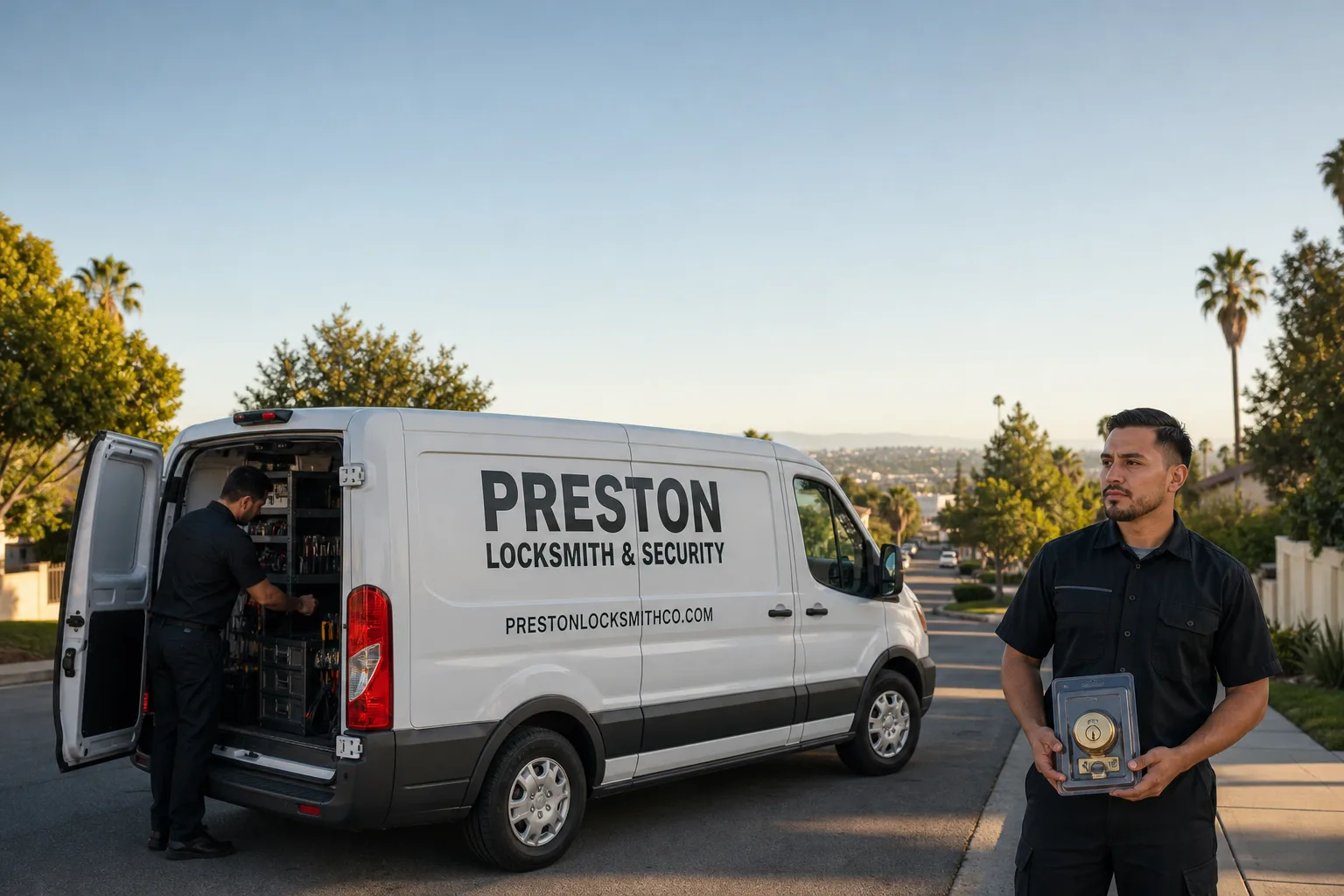
Non-destructive entry first, always - and we re-key Schlage, Kwikset, and Baldwin locks on the spot while you watch
You get a price before we start. It does not change when we arrive. No surprises.
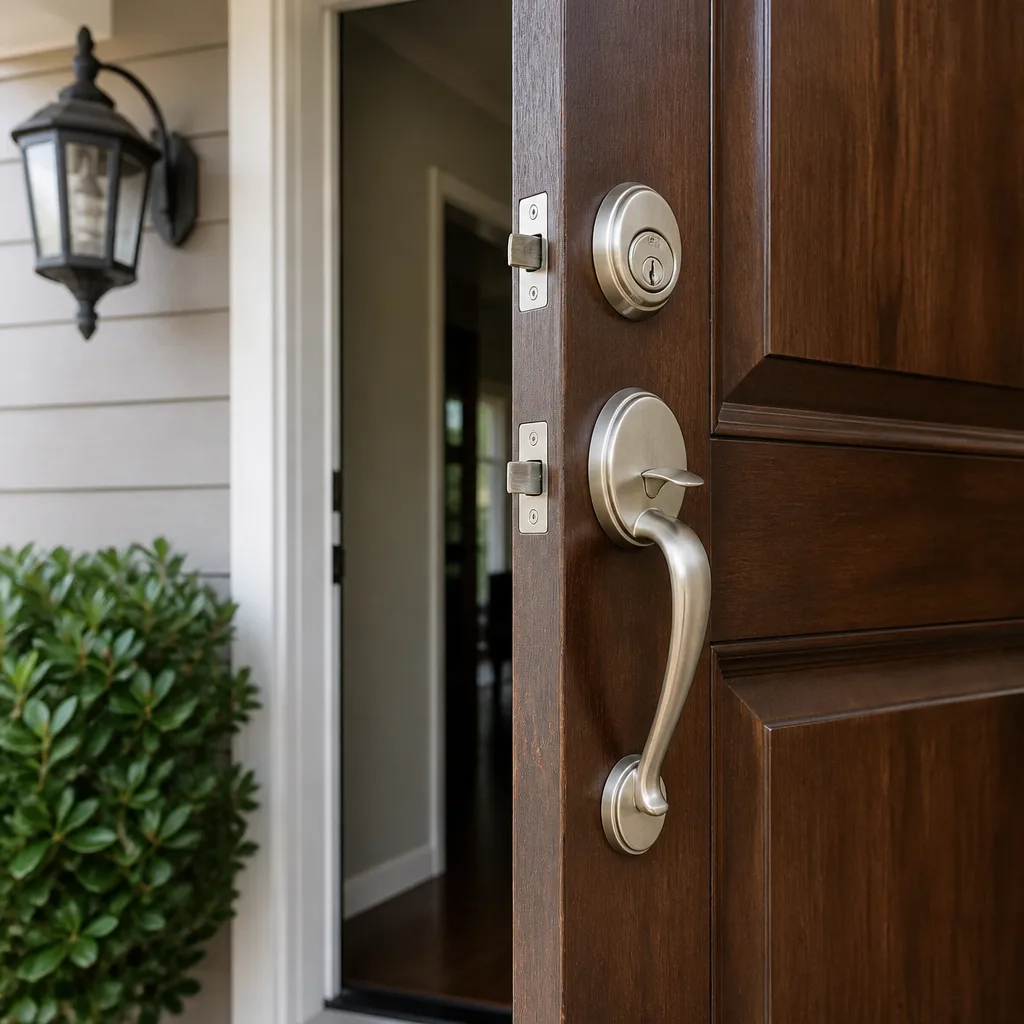
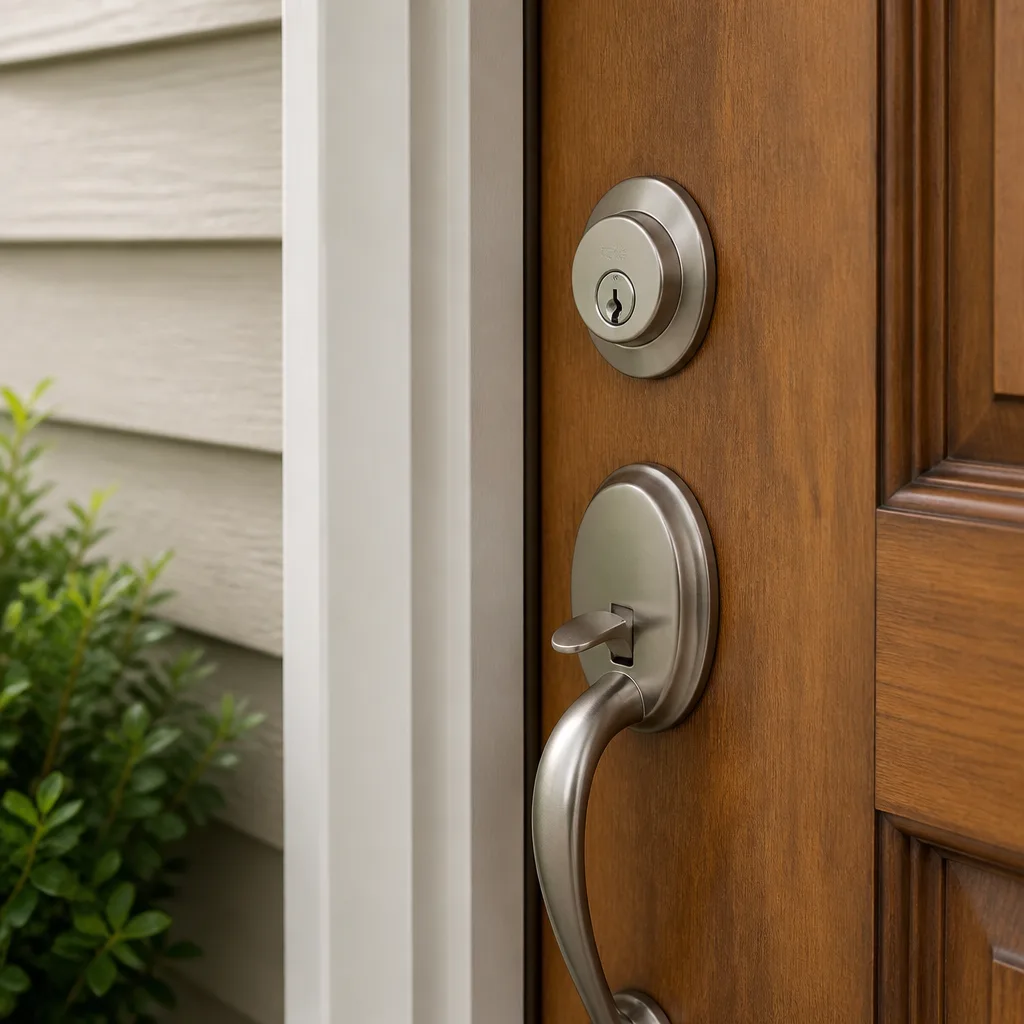
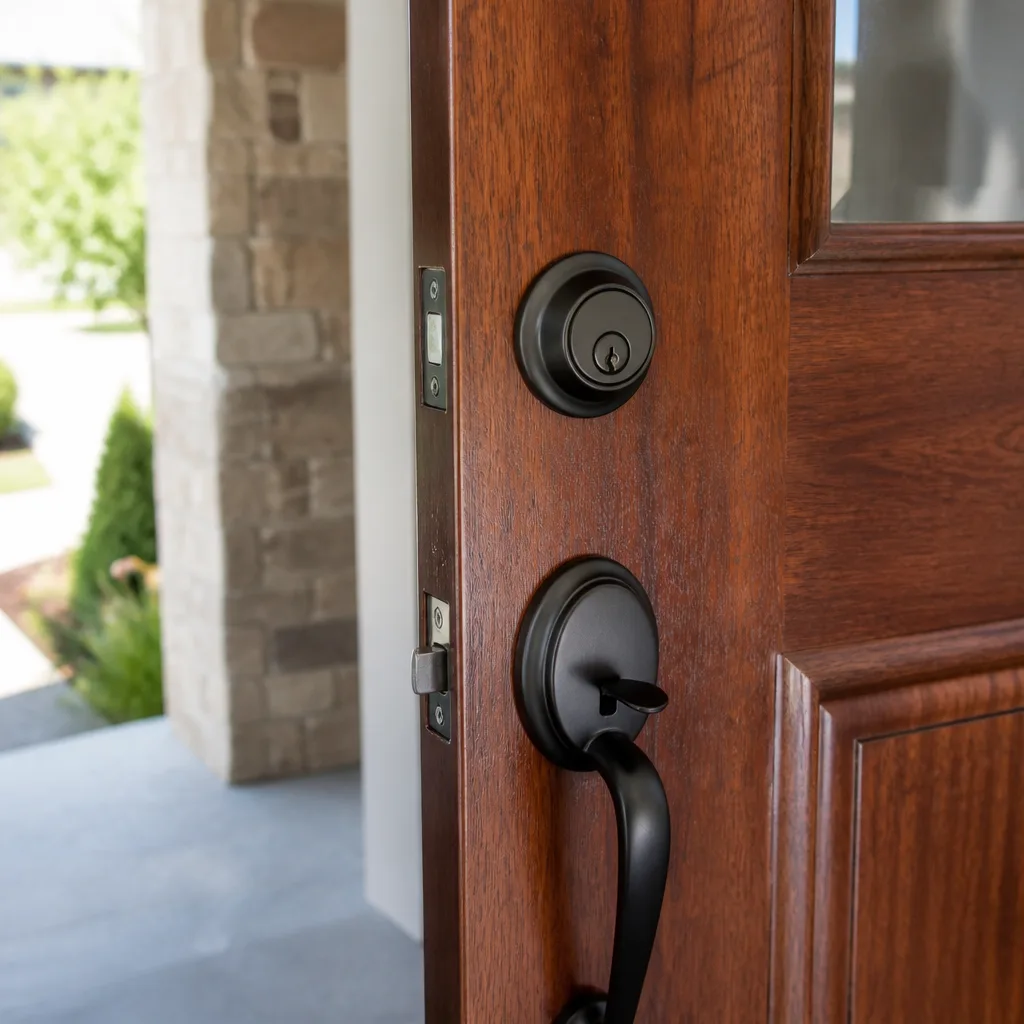
Key Turns but the Door Won’t Open
When your key turns in the lock but the door stays shut, the latch or deadbolt mechanism has almost certainly disconnected from the cylinder – the key is doing its job, but the hardware behind it isn’t responding. This is a mechanical failure inside the lock or door, not a key problem. In most cases, a locksmith can have it diagnosed and resolved in a single visit.
The turning key is doing exactly what it should: rotating the cylinder and sending a signal down the mechanism. But somewhere between that rotation and the bolt retracting, something has broken, seized, or slipped out of alignment. It might be a snapped tailpiece (the small bar that links the cylinder to the latch), a worn cam, a deadbolt that has jammed mid-throw, or a door that has shifted enough in its frame that the bolt can’t clear the strike plate. Each cause has a different fix, and knowing which one you’re dealing with saves time and money.
Why It Happens
1. Broken or Disconnected Tailpiece
The tailpiece is a small metal bar that connects the back of the cylinder to the latch or deadbolt mechanism. When it snaps – and it does, especially on locks that have seen years of daily use – the cylinder spins freely but nothing moves. You’ll notice the key turns all the way around with almost no resistance, maybe even past 360 degrees, and the bolt doesn’t budge at all. That free-spinning feeling is the clearest sign the tailpiece has given up.
2. Deadbolt Jammed Mid-Throw
A deadbolt that extended partway and then stopped – maybe during a hasty exit – can get trapped between the door and the strike plate. When that happens, the key turns to a point and then hits a hard stop, or the bolt moves a few millimeters and won’t go further. Look at the edge of your door: if you can see the bolt tip protruding but it won’t retract, the bolt is stuck against the frame or the strike plate lip. This sometimes happens after the door swells from moisture or the hinges have settled.
3. Door Misalignment
Houses settle. Frames shift. Hinges wear. Any of these can push the door slightly out of square so the bolt no longer lines up with the hole in the strike plate. The key turns fine, the bolt moves, but it’s hitting the edge of the strike plate instead of sliding into it. You’ll often hear a grinding or scraping sound as the bolt tries to extend, and you may be able to see a scuff mark on the strike plate where the bolt is catching. This is very common after a wet season or in older homes with wooden frames.
4. Internal Mechanism Failure
Locks have small springs, cams, and levers inside that translate cylinder rotation into bolt movement. Any one of them can break, corrode, or simply wear out – especially in locks that are five or more years old and have never been serviced. This is less visible from the outside, but a clue is inconsistency: the key works fine some days and fails others, or it takes unusual force to get the bolt to move. If a lock is unpredictable, the internal mechanism is usually the culprit.
What to Do Right Now
- Stop forcing it. If the key is turning and nothing is moving, applying more pressure won’t help – it can snap the key inside the cylinder or damage the mechanism further. Turn the key only as far as it naturally goes and leave it there.
- Check the bolt visually. Look at the edge of the door. Is the bolt extended, partially extended, or fully retracted? This single observation tells the technician a lot and will speed up the diagnosis when your local Preston Locksmith & Security team arrives.
- Don’t try to pry the door. Forcing the door open with a shoulder or a tool when the bolt is engaged can split the door frame, damage the door itself, or leave you with a much bigger repair bill. If you need entry urgently, call for help instead.
- Photograph what you can see. A quick photo of the lock face, the door edge, and the strike plate area gives the technician useful information before they’re even in the driveway. It also documents the condition of the door before any work begins, which is good for both of you.
- Note when it started and whether anything changed recently. A door that failed after heavy rain points to swelling. One that failed after you bumped it or had trouble last week points elsewhere. That context speeds up the repair.
How We Fix It
When a Preston Locksmith & Security technician arrives, the first thing they do is watch the key turn – or not turn – and check the bolt movement at the door edge. That usually narrows the cause within a minute or two. From there, the path depends on what they find.
A broken tailpiece or failed internal mechanism typically means the lock needs to be disassembled and the damaged part replaced, or the whole lockset swapped out if the hardware is too worn to repair cleanly. Door misalignment usually calls for adjusting the strike plate position so the bolt actually has somewhere to go. A jammed bolt may only need the mechanism cleared and the door re-examined for frame issues.
These repairs fall under our Door Lock Repair service, and depending on what’s found, a Rekey may make sense at the same visit if the cylinder is being removed anyway.
Before any work starts, you get a written price – that’s the price on the invoice, not a starting point for negotiation. Most of these repairs are completed in under an hour. Every repair is covered by the 365-Day Done Right Promise: if it’s not done right, we make it right, and that’s in writing before we leave.
Frequently Asked Questions
It depends on whether you can get in and out of your home safely right now. If you’re locked out completely, it can’t wait – call (409) 405-4485 and your local team will get someone moving. If you’re inside and can use another door, you have more flexibility, but don’t keep using the broken lock: forcing it repeatedly is the fastest way to make a minor repair into a full replacement. The sooner it’s looked at, the simpler the fix usually is.
Many of these failures – broken tailpieces, jammed bolts, worn cams – can be repaired without replacing the whole lockset, especially on quality hardware like Schlage, Kwikset, Baldwin, or Medeco. The technician will tell you the honest answer after the diagnosis, and you’ll have a written price for both options if replacement turns out to be the better call. Nothing happens until you say yes to the written estimate.
In most cases, yes. Call (409) 405-4485 right now and a live person will answer – no voicemail, no callback queue. They’ll give you a real arrival window you can track, not a vague four-hour range. Your local Preston Locksmith & Security team keeps common lock parts on the van, so the repair often happens on the first visit.
Yes. The price is put in writing before any work starts – that’s a firm part of how Preston Locksmith & Security operates under The Relay Visibility Guarantee. The technician diagnoses the problem, gives you a written price, and only begins work once you approve it. What’s on that paper is what’s on the invoice. There’s no call-out surcharge added at the door, and the price doesn’t swell between the estimate and the end of the job.
Get It Fixed
Call (409) 405-4485 right now – a live person answers every call, around the clock. Your local Preston Locksmith & Security team will give you a real arrival time, a written price before anything starts, and a 365-Day Done Right Promise on the repair. You can also book online if that’s easier.
Written by Kevin Yoon, Owner at Preston Locksmith & Security, part of the Relay Home Co. family since 2008.
What Our Customers Say
"Showed me how to rekey a lock myself for the next time."
- Omar W."Commercial office lock replacement. Booked in the app, got a confirmation and a text with ETA. Quick and tidy."
- Jake L."Re-pinned the locks at our rental. Convenient and quick."
- Tina D.