
Last updated October 9, 2026
Non-destructive entry first, always - and we re-key Schlage, Kwikset, and Baldwin locks on the spot while you watch
You get a price before we start. It does not change when we arrive. No surprises.
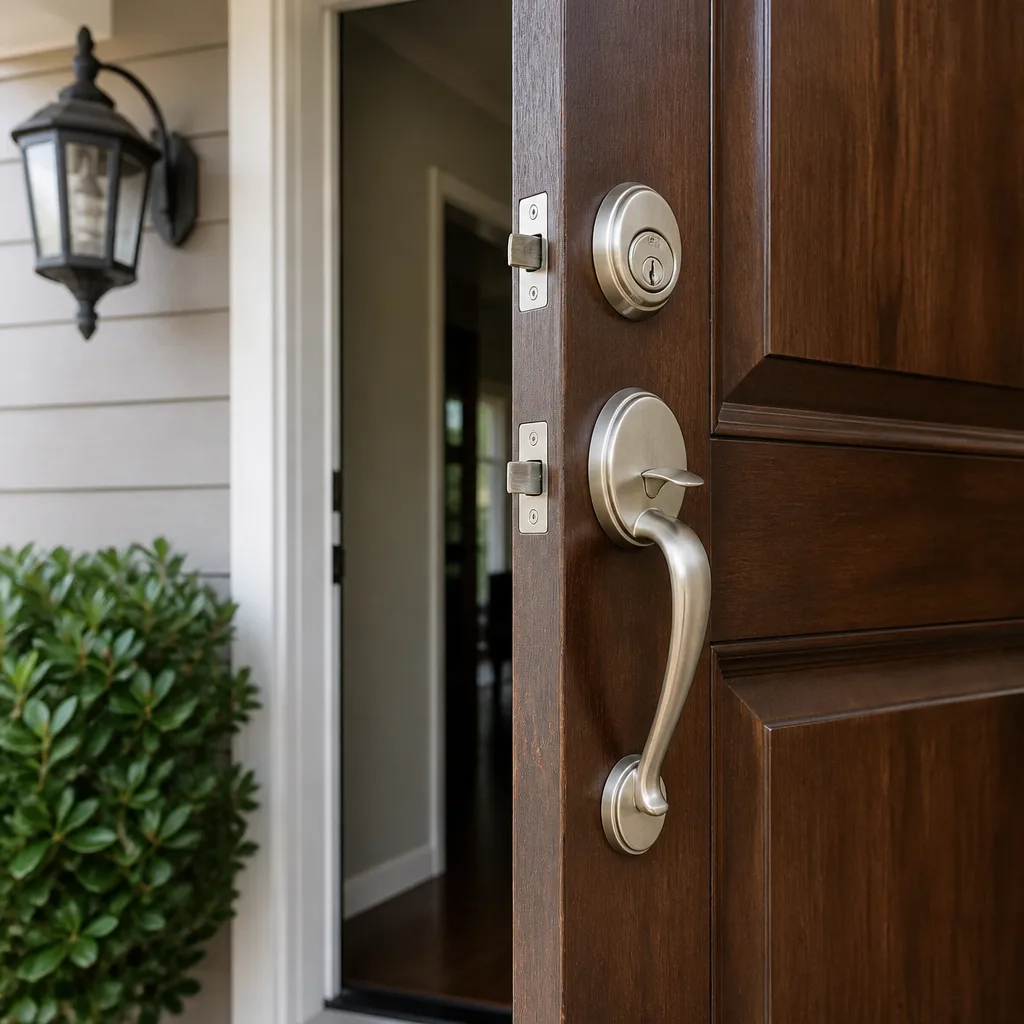
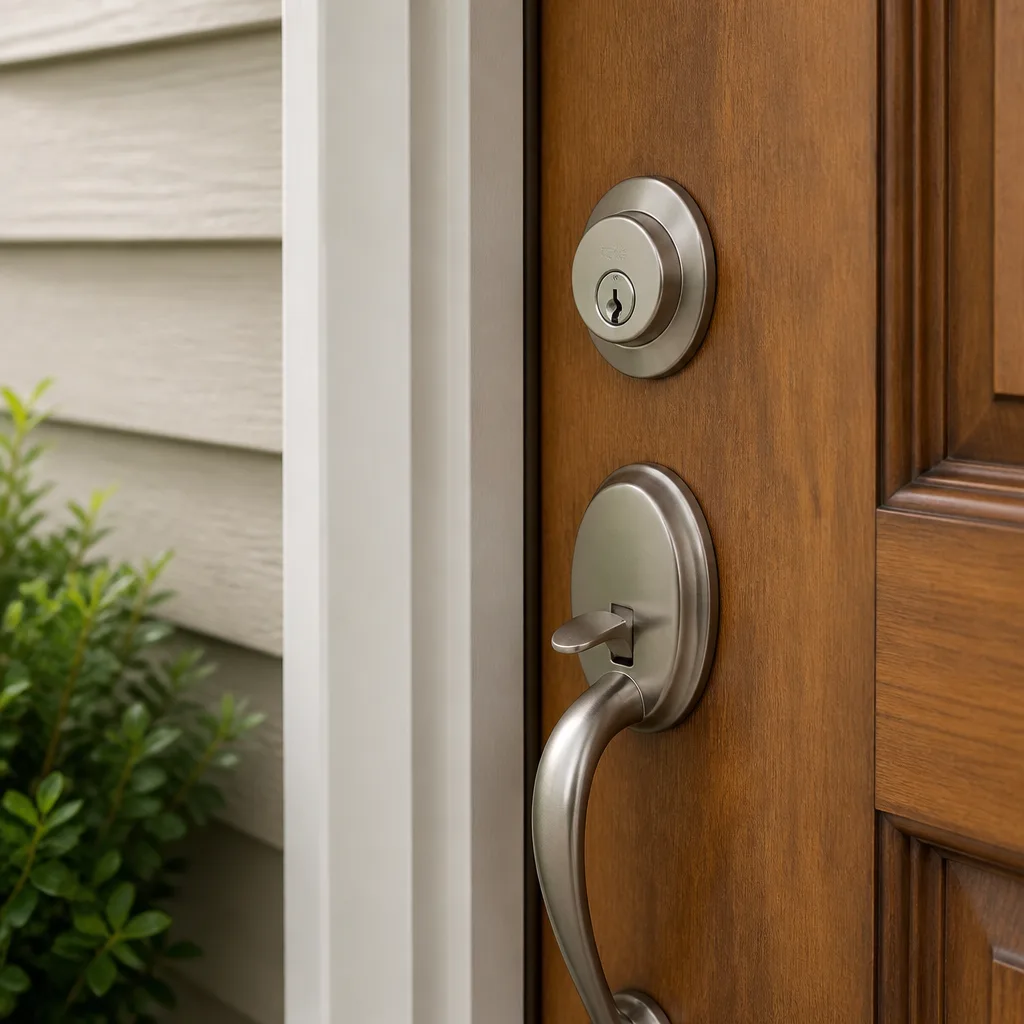
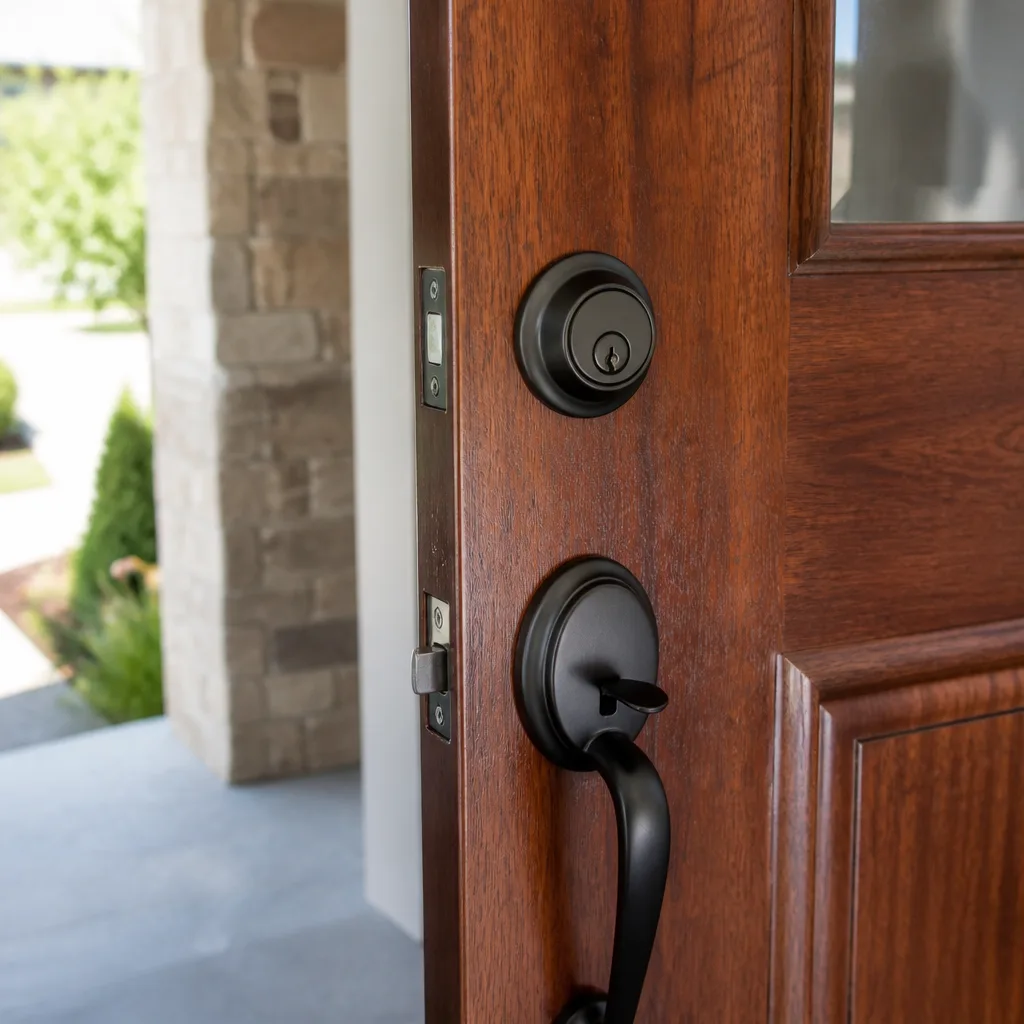
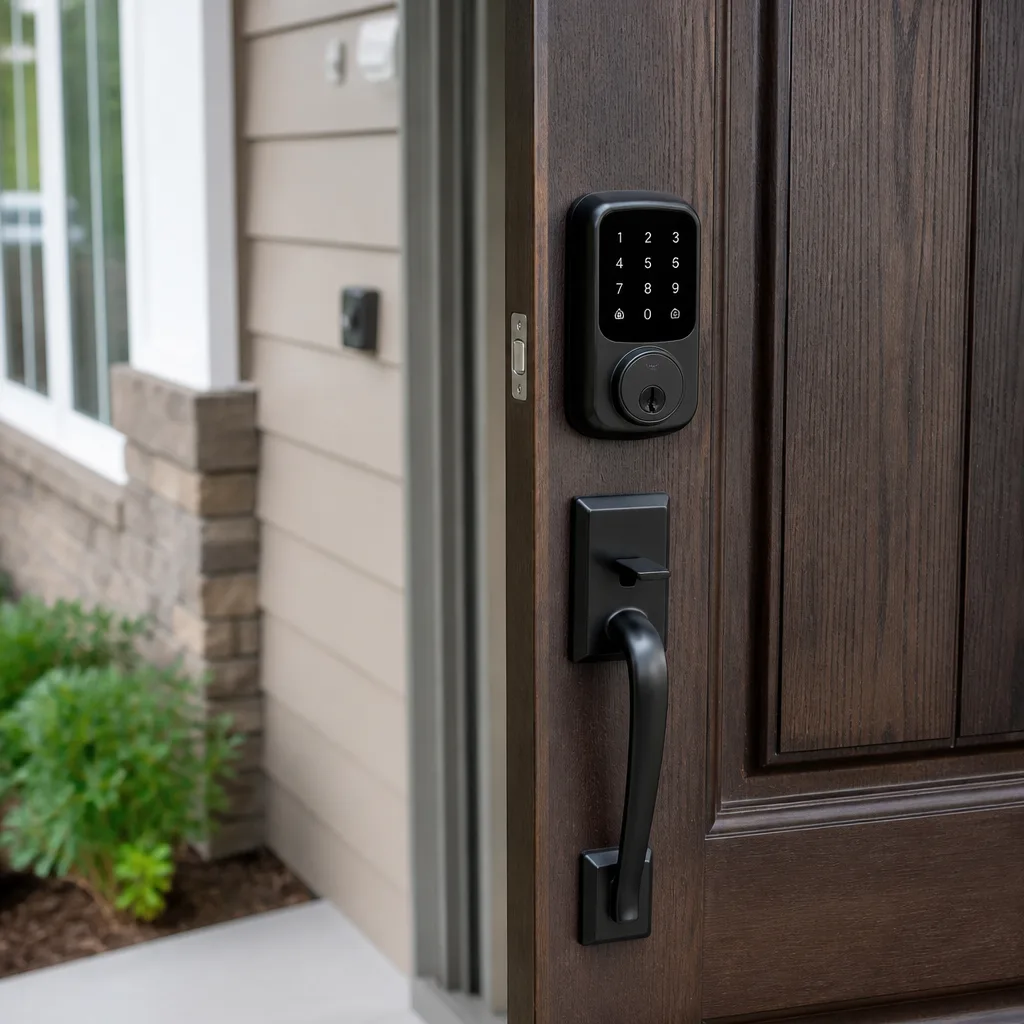
Locksmith Permits, Codes & Inspections in CA: What You Need to Know
If a locksmith installs a double-cylinder deadbolt on a bedroom egress door in California without flagging it as a code violation, your home can fail a sale inspection years later, and the locksmith is long gone. Most homeowners assume locksmith work is permit-free, but certain lock installations, particularly on egress doors and fire-rated assemblies, trigger legal requirements under California Building Code (CBC) Chapter 10 and Title 19. This guide walks through exactly which lock jobs in Los Angeles require permits, which do not, and how to avoid a retrofit nightmare at escrow.
Quick Answer
Most residential lock replacements and rekeys in California require no building permit, but new lock installations that alter fire-rated door assemblies or restrict egress on required exit doors can trigger CBC Chapter 10 and Title 19 compliance issues. See our Rekey Locks Maintenance Schedule: What to Do and When for guidance on keeping rekeys compliant. Locksmiths performing the work must hold a California BSIS locksmith license, not a general contractor’s license, unless the project involves structural door modifications. If unpermitted lock work is discovered during a Los Angeles home sale inspection, the seller typically pays to bring it into compliance before escrow closes.
Table of Contents
- Which Lock Jobs Require a Permit in California and Which Do Not
- Title 19 Egress Rules: Why Double-Cylinder Deadbolts Are Restricted
- California BSIS Licensing: Who Is Legally Allowed to Do What
- How LA City and County Fire Codes Differ From State Minimums
- What Happens at Resale When Unpermitted Lock Work Is Discovered
- How to Retroactively Correct Non-Compliant Lock Work
- Common Mistakes to Avoid
- When to Call a Professional
- Frequently Asked Questions
- The Bottom Line
Which Lock Jobs Require a Permit in California and Which Do Not
The line between hardware replacement and new installation under CBC Chapter 10 is where most confusion lives. Replacing an existing deadbolt, doorknob, or lever with a similar device in the same prep hole does not require a building permit anywhere in California. The door’s fire rating, egress function, and structural integrity remain unchanged. You are swapping hardware, not altering the assembly.
New installations are different. Cutting a fresh bore hole into a fire-rated door to add a deadbolt where none existed changes the door’s fire resistance rating. Installing a lock set that requires mortising new pockets into the door stile can compromise its structural core. Adding an access-control strike or mag lock to a fire-rated door in a Los Angeles commercial building falls under CBC Chapter 10 fire door assembly rules, which state that any modification to a labeled fire door must preserve the original listing requirements. Here is the practical breakdown:
- No permit required: Rekeying existing cylinders, replacing a deadbolt or knob in the same prep, swapping a lever for a knob in the same bore, installing a smart lock over an existing deadbolt hole, and mailbox lock replacements.
- Permit may be required: Boring a new hole in a fire-rated door, adding a deadbolt to a door that never had one, installing an electronic strike or mag lock that modifies the door frame or door leaf on a rated assembly, and any work on a labeled fire door assembly in multi-family or commercial Los Angeles properties.
- Permit required: Structural modifications to a door frame or wall to accommodate new locking hardware, and any lock installation that changes the door’s swing, clearance, or latching mechanism on a required exit door.
In our experience across Los Angeles, the single most common violation we see-detailed in our Locksmith Warning Signs: A Los Angeles Homeowner’s Reference Guide-is a second deadbolt added below the original on an entry door. Homeowners do it for “extra security.” But on a fire-rated door, the additional bore hole and hardware can void the door’s rating. At resale, an inspector flags it, and the seller is on the hook for a new door or a field inspection by a certified fire door inspector. Neither is cheap.
Title 19 Egress Rules: Why Double-Cylinder Deadbolts Are Restricted
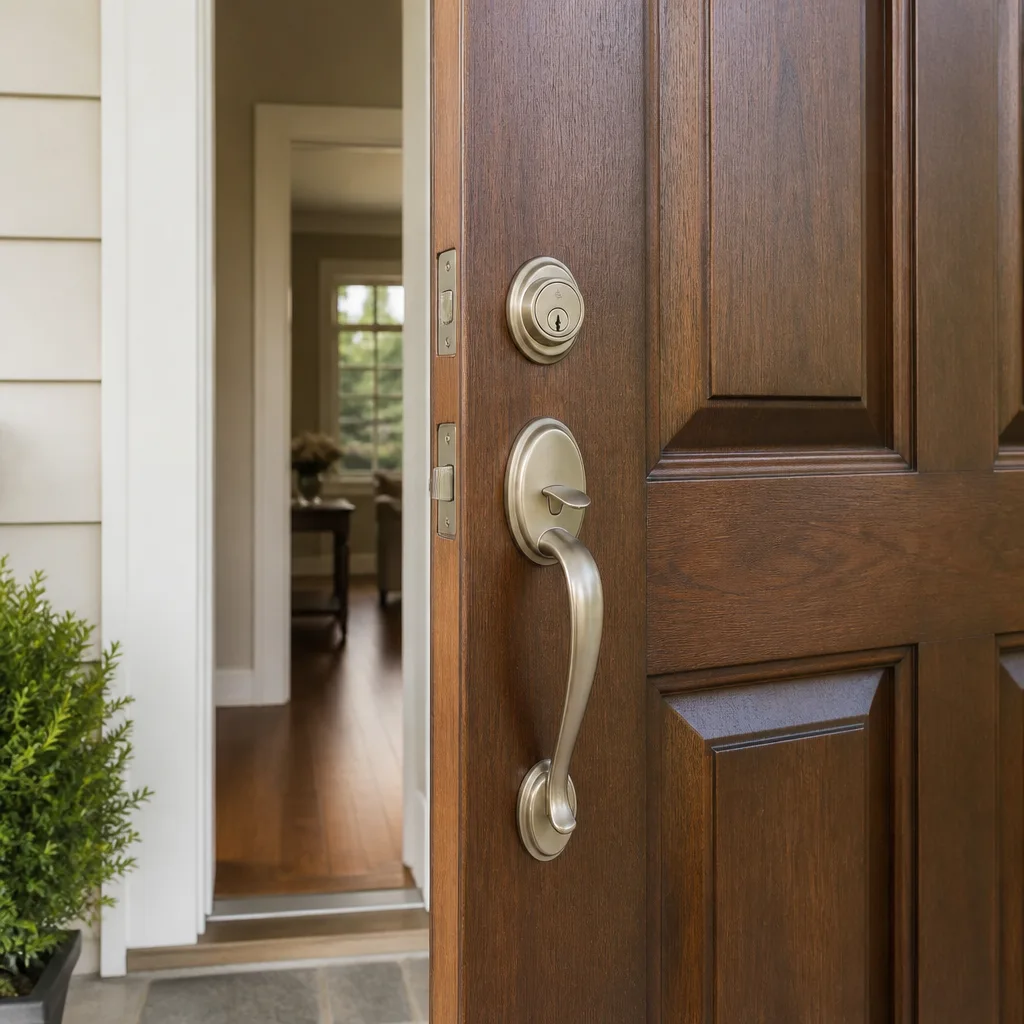
California Title 19, Division 1, Chapter 3 governs fire safety in residential occupancies. The core requirement: every sleeping room and every required exit door must be openable from the inside without a key, special knowledge, or any tool. A double-cylinder deadbolt, the kind with a keyhole on both sides, fails this requirement outright when installed on a designated egress door.
Why do people install them? A double-cylinder deadbolt prevents someone from breaking the glass next to a door, reaching in, and turning the thumbturn to unlock. That is a real security benefit on doors with adjacent glass panels within 40 inches of the lock. But the fire-safety tradeoff is severe. In a fire, a person without the key cannot exit. Title 19 is explicit: on required egress doors, the unlocking mechanism must be operable from the inside without a key.
- Identify the egress doors. In a single-family home, the front door, the door between the house and garage, and any exterior door serving a bedroom are required egress doors. Bedroom doors themselves are not exterior egress doors, but balcony doors and ground-floor bedroom exterior doors are.
- Check the hardware. If any egress door has a keyed lock on the interior side, it is non-compliant.
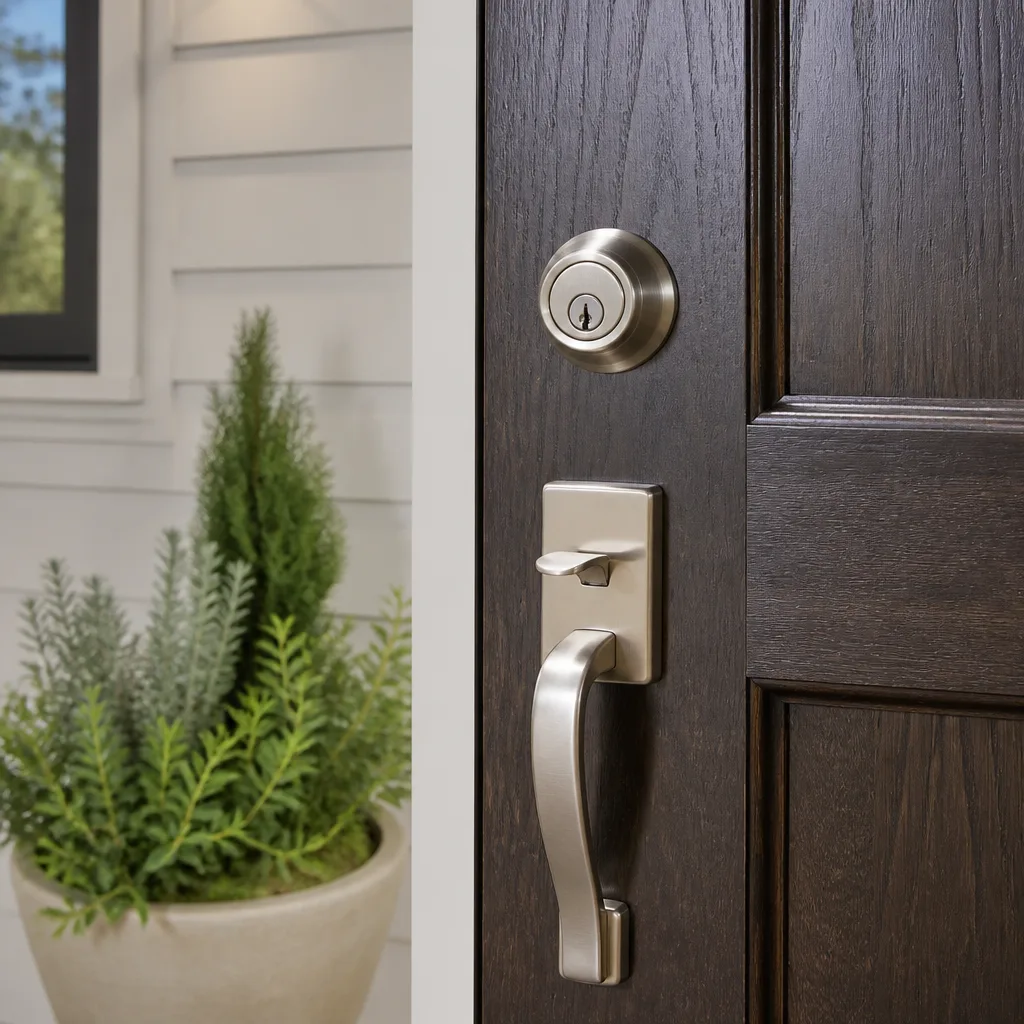
- Choose a compliant alternative. A single-cylinder deadbolt with an interior thumbturn meets both security and egress requirements. For added protection against glass-break entry, add a security film to the glass or install a lock with a built-in alarm, both of which preserve egress.
Los Angeles inspectors enforce Title 19 during resale inspections on single-family homes and during annual inspections on multi-family buildings. The fix is usually straightforward: swap the double-cylinder deadbolt for a single-cylinder model from Schlage or Kwikset, or install a compliant multi-point lock from a brand like Medeco if higher security is required. The cost ranges from $85 to $180 per door for parts and labor when done by a licensed locksmith, written price confirmed before work starts.
California BSIS Licensing: Who Is Legally Allowed to Do What
California regulates locksmiths through the Bureau of Security and Investigative Services (BSIS) under the Department of Consumer Affairs. Anyone performing locksmith services for compensation in California must hold a valid BSIS locksmith company license, and employees who perform locksmith work must hold individual locksmith employee registrations. This is entirely separate from a general contractor’s license, which is issued by the Contractors State License Board and is not a substitute.
The practical distinction matters. A general contractor can frame a door opening, hang a door, and install hardware as part of a permitted construction project. But a general contractor cannot legally advertise locksmith services, open locked cars, or sell rekeying as a standalone service unless they also hold a BSIS locksmith license. The reverse is also true. A BSIS-licensed locksmith can replace locks and rekey cylinders but cannot legally perform structural door modifications that require a building permit unless the work is performed under a general contractor’s permit or the locksmith also holds a GC license.
- BSIS locksmith license: Required for rekeying, lock picking, lock installation and replacement, key duplication for restricted keyways, and automotive lockout services.
- General contractor license: Required for structural door replacement, frame modification, wall alteration, and any permitted construction work.
- Fire door inspection: In Los Angeles, fire door assembly inspections and relabeling must be performed by a certified fire door inspector, not a general locksmith, unless the locksmith holds that certification.
Before hiring anyone for lock work in Los Angeles, ask for the BSIS license number and verify it on the BSIS website. A legitimate locksmith will provide it without hesitation. A handyman advertising lock work on Craigslist will not. The distinction protects you from unlicensed work that creates liability at resale.
Preston Locksmith & Security has been serving Los Angeles since 2008. Every job is covered by The Relay Visibility Guarantee, which includes a written price before work begins, a live trackable arrival time, before-and-after photos of every job, and a written guarantee on every repair with a free second visit if the repair fails. Our phones are answered by a live person 24/7, and every technician is background-checked and arrives in uniform. You can learn more about our Preston Locksmith & Security home services and how we approach lock work across the city.
How LA City and County Fire Codes Differ From State Minimums
California’s Title 24 (Building Standards Code) and Title 19 set the statewide floor. Local jurisdictions can adopt stricter amendments, and Los Angeles routinely does. The Los Angeles Fire Code, found in Chapter 5 of the Los Angeles Municipal Code, incorporates the California Fire Code with L.A.-specific amendments. For multi-family residential buildings, those amendments matter.
One key difference: Los Angeles requires annual compliance checks on fire-rated door assemblies in buildings with three or more dwelling units. This includes verifying that self-closing devices work, that latch bolts seat fully into strike plates, and that no field modifications, including added deadbolts or non-compliant lock swaps, have voided the door’s rating. State law sets the minimum. L.A. enforces it with annual inspections and a fee schedule.
Another difference is in access control. State fire code allows certain electronic locking arrangements on egress doors in specific occupancies. Los Angeles adds a requirement for a manual override that is visible and operable from the egress side without special tools. A mag lock without an approved manual release button that fails open on power loss does not pass an L.A. fire inspection on a multi-family exit door.
For commercial properties, the differences compound. A Commercial Locksmith in Los Angeles working on a fire-rated stairwell door in a downtown office building must account for the L.A. Fire Department’s specific requirements for positive latching, self-closing devices, and signage, all of which exceed the state baseline. If you operate a commercial building in Los Angeles, the practical takeaway is this: before any lock change on a fire-rated door, check whether the door carries a fire label, and if it does, the work must preserve the listing or be performed by someone who can document compliance.
What Happens at Resale When Unpermitted Lock Work Is Discovered
During a Los Angeles home sale, the buyer’s home inspector may flag lock-related issues, but the more consequential review happens when the buyer requests a retrofit inspection or the lender requires one. If unpermitted lock work is discovered, here is the sequence of events:
- The inspector flags the issue. Common flags: a double-cylinder deadbolt on an egress door, a door that fails to latch closed due to a misaligned strike, or a fire-rated garage entry door with an added deadbolt that was not field-inspected.
- The buyer requests correction. In California, sellers must disclose known material facts, and buyers typically request the seller to remediate code violations discovered during inspection.
- Correction is negotiated. The seller either pays a locksmith to correct the hardware or offers a credit. If the issue is on a fire-rated door, the correction may require a certified fire door inspector and a new door, which can run $600 to $1,400 installed in Los Angeles.
- Escrow closes only after compliance. If the issue is serious enough, the lender or the buyer’s insurance provider will not close until documentation proves the door is compliant. Sellers who try to ignore the issue risk the deal falling apart.
What most sellers do not realize is that the cost of correction during escrow is often higher than the cost of doing it right the first time. A Door Lock Repair in Los Angeles visit during escrow comes with time pressure, and sellers pay whatever the fastest available technician charges. The 365-Day Done Right Promise from Preston Locksmith & Security exists specifically because we have seen too many Los Angeles sellers blindsided by cheap lock work that failed inspection years later. If it is not done right, we make it right.
How to Retroactively Correct Non-Compliant Lock Work
If a home inspection flags lock-related code issues, correction follows a predictable path. The goal is documented compliance acceptable to the buyer, the buyer’s lender, and the local building department.
- Document the violation. Get the inspector’s finding in writing, including a photo and the code section cited. This tells you exactly what must change.
- Determine the correction type. If the issue is a double-cylinder deadbolt on an egress door, the correction is a straightforward hardware swap. If the issue is a modified fire-rated door, the correction may require a field inspection by a certified fire door inspector, or door replacement.
- Hire a licensed professional. Use a BSIS-licensed locksmith for hardware correction. If a fire door inspector or general contractor is needed, confirm their certifications before scheduling.
- Document the correction. Request a written description of the work performed, the hardware installed, and photos after completion. If the work involved a fire-rated door, request documentation that the door’s rating is intact.
- Submit to the buyer or inspector. Provide the documentation promptly. In most Los Angeles transactions, this satisfies the inspection contingency without a building department filing, because hardware replacement on an existing door does not require a permit.
For corrections on multi-family buildings in Los Angeles, the process includes the LAFD compliance path. A licensed locksmith can perform the hardware work, but the annual fire safety inspection requires documented compliance with the L.A. Fire Code. If the original lock work altered a fire door, the building owner may need an LAFD-accepted fire door inspector to re-certify the assembly.
The lesson from thousands of Los Angeles door inspections is simple: the cheapest lock installation is rarely the cheapest when the house sells. A $45 handyman deadbolt install that compromises a fire-rated door can cost the seller $1,000 or more at escrow. The honest approach costs less in the long run. If you are unsure whether your existing lock work is compliant, a Rekey Locks in Los Angeles service can often address compliance issues in the same visit, since the technician is already on site with the necessary hardware.
Common Mistakes to Avoid
- Installing a double-cylinder deadbolt on a bedroom egress door. This is the most common Title 19 violation we see in Los Angeles single-family homes, and it almost always surfaces at resale. The fix is a single-cylinder deadbolt with a thumbturn, which preserves fire-safe egress while keeping security intact.
- Hiring a handyman to drill a second deadbolt into a fire-rated door. The new bore hole voids the door’s rating and creates a liability that neither the handyman nor the homeowner discovers until inspection. Fire-rated garage entry doors in Los Angeles homes are the usual victims.
- Assuming a general contractor’s license covers locksmith work. In California, locksmith services require BSIS licensing, and a GC license alone does not authorize rekeying, lockout work, or standalone lock installation. Ask for the BSIS number and verify it.
- Skipping the documented compliance on multi-family exit doors. Los Angeles Fire Code requires annual inspection of fire-rated assemblies in multi-family buildings, and undocumented lock changes are a common deficiency. Document every lock change on a rated door, including the product installed and the technician who performed the work.
- Buying high-security hardware without checking the keyway restrictions. A Medeco or Abloy cylinder is only as secure as the key control behind it. If you buy restricted-keyway hardware without a key control agreement, you lose the very benefit you paid for. Confirm key control in writing before installation.
- Ignoring the original door prep when upgrading to a smart lock. Many smart locks require a larger bore or a different backset than existing hardware. Enlarging the bore on a fire-rated door without preserving the listing is a code violation. Use a smart lock that fits the existing prep, or replace the door with one that is factory-prepped for the new lock.
When to Call a Professional
Call a licensed locksmith when the lock work involves any egress door, any fire-rated door, any door in a multi-family building, or any situation where you are unsure whether the existing hardware is compliant. Specific triggers: you are selling your home and want a pre-inspection lock check, you just bought a home and do not know the key history, you need a restricted-keyway system with documented key control, or you have a double-cylinder deadbolt that a previous owner installed. All are situations where the cost of getting it wrong exceeds the cost of a professional visit. If you’re troubleshooting existing rekeyed hardware, our Rekey Locks Troubleshooting: Common Problems and How to Fix Them may help identify issues before calling. Preston Locksmith & Security offers free estimates in Los Angeles, call (409) 405-4485, and every quote includes a written price before a single tool leaves the bag.
Frequently Asked Questions
No, replacing an existing deadbolt or doorknob in the same prep hole requires no building permit anywhere in California, including Los Angeles. The permit requirement attaches only when you modify a fire-rated door, alter the door structure, or install new locking hardware that changes the door’s egress function. Call (409) 405-4485 for a free estimate on any lock replacement in the Los Angeles area.
Double-cylinder deadbolts are not illegal in California, but they are prohibited on required egress doors under Title 19 because they require a key to exit from the inside. They remain legal on doors that are not designated egress doors, but in practice, most exterior doors in a Los Angeles home are egress doors, which makes single-cylinder deadbolts the standard compliant choice.
A locksmith in California must hold a BSIS locksmith company license, and the technician performing the work must hold an individual locksmith employee registration. A general contractor’s license does not authorize standalone locksmith services. Always verify the BSIS license before scheduling work, and call (409) 405-4485 for a free estimate from a licensed Los Angeles locksmith.
Correcting a double-cylinder deadbolt on an egress door typically costs $85 to $180 per door for parts and labor. Correcting a modified fire-rated door can run $600 to $1,400 if the door must be replaced and a certified fire door inspector is required. The exact price depends on the door, the hardware, and the inspection requirements, and a written quote is always provided before any work begins.
Home inspectors commonly flag double-cylinder deadbolts on egress doors, doors that fail to latch, and visible modifications to fire-rated doors, especially in Los Angeles neighborhoods where older homes dominate. Fire-rated garage entry doors with added deadbolts are a frequent finding. Fixing issues before listing costs less than negotiating repairs during escrow.
Ask for the locksmith’s BSIS license number, then search it on the California Bureau of Security and Investigative Services license lookup page. The license should be active and show the correct company name. A legitimate Los Angeles locksmith will provide this information immediately and without hesitation. Call (409) 405-4485 to speak with a live person at Preston Locksmith & Security, and we will verify our license information for you on the spot.
The Bottom Line
Most residential lock replacements in California require no permit, but the exceptions carry real financial consequences. Double-cylinder deadbolts on egress doors violate Title 19, modified fire-rated doors fail Los Angeles inspections, and unlicensed handyman lock work surfaces at the worst possible moment, during escrow. The cost of correction always exceeds the cost of doing it correctly the first time. Use a BSIS-licensed locksmith, keep documentation of every lock change on a fire-rated door, and treat egress doors as non-negotiable fire-safety equipment. For more guides & resources on Los Angeles lock compliance, visit our blog. In Los Angeles, where older housing stock and strict fire code enforcement collide, that discipline is not optional. It is the difference between a smooth sale and a deal that falls apart.
Written by Kevin Yoon, Owner at Preston Locksmith & Security, serving Los Angeles since 2008.